National flag guide
Flag of Ethiopia: Meaning, Symbols and History
Ethiopia’s green-yellow-red national colors were consolidated in a rectangular tricolour under Menelik II in 1897, following the victory at Adwa.
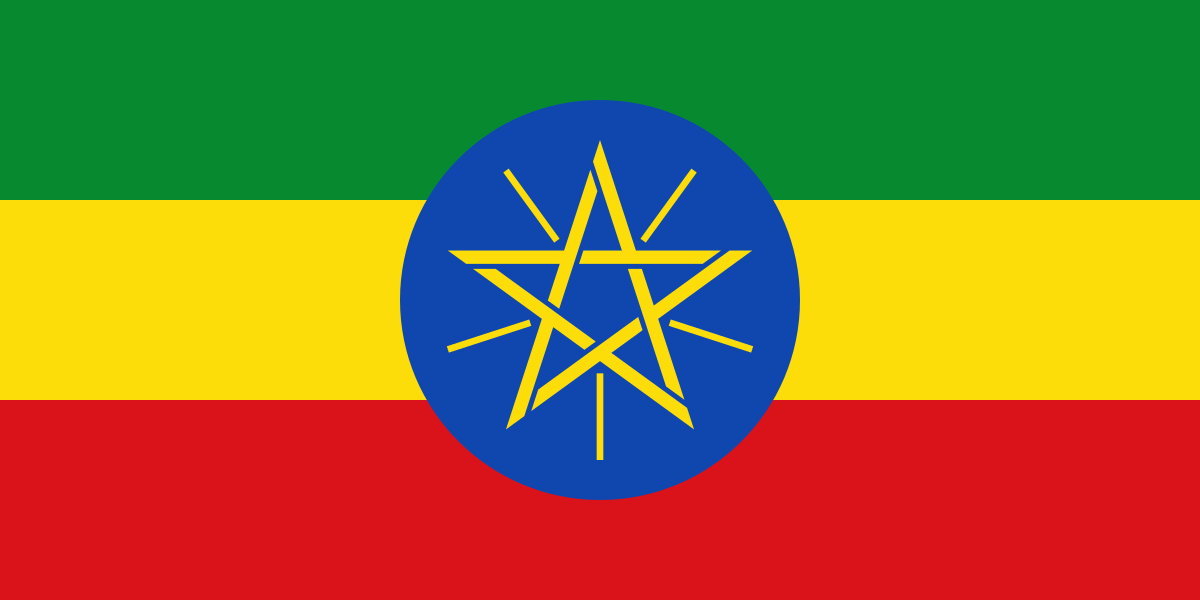
Three equal horizontal bands of green (top), yellow, and red, with a light blue disk centered on the three bands; on the disk is a yellow pentagram with single yellow rays emanating from the angles between the points. The blue-disc emblem represents equality and unity within the federal state.
The design and its details
Three equal horizontal bands of green (top), yellow, and red, with a light blue disk centered on the three bands; on the disk is a yellow pentagram with single yellow rays emanating from the angles between the points.
| Flag | Ethiopia |
|---|---|
| Collection | Country flags |
| Adoption or specification | 1897 tricolour tradition; present emblem from 1996 |
| Browsing region | Africa · Eastern Africa |
| Illustrated proportions (height:width) | 1:2 |
What the flag means
The blue-disc emblem represents equality and unity within the federal state. Plain tricolours and Lion of Judah flags continue in cultural, political or diaspora settings, but have different official histories.
| Element | Meaning or historical connection |
|---|---|
| Green | The land’s fertility and hope. |
| Yellow | Justice and harmony. |
| Red | Sacrifice and heroism. |
| Blue disc | Peace. |
| Gold pentagram and rays | Unity and equality among the peoples of Ethiopia. The current emblem must be distinguished from earlier imperial or plain tricolour versions. |
How the flag developed
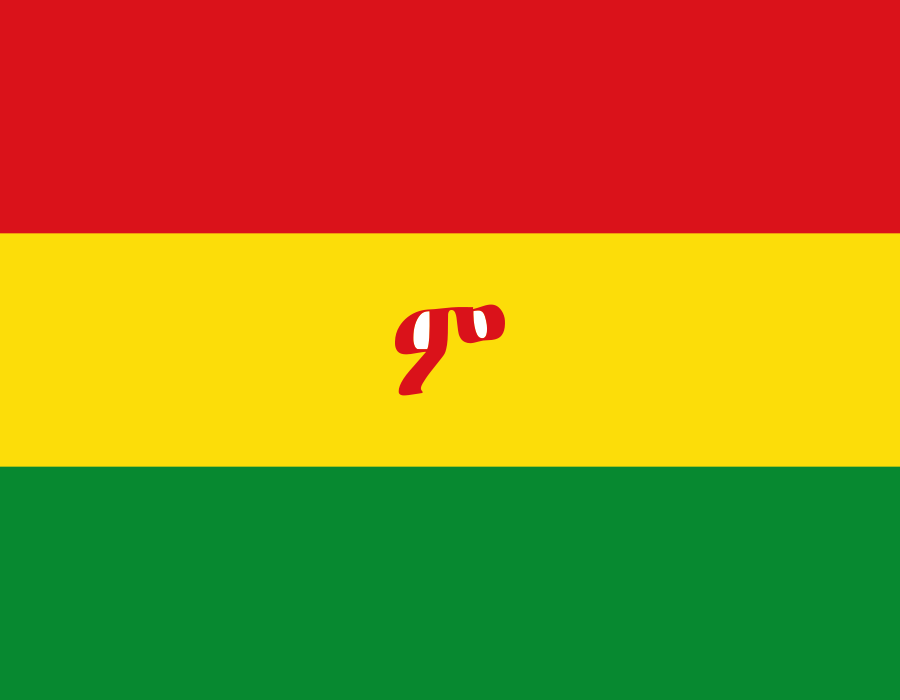
Ethiopia’s green-yellow-red national colors were consolidated in a rectangular tricolour under Menelik II in 1897, following the victory at Adwa. Earlier pennants and royal banners belong to the longer history of these colors but should not all be drawn as the modern flag.
The imperial Lion of Judah emblem was removed after the monarchy fell in 1974. Socialist-era state emblems followed, and the federal national emblem—a yellow pentagram with rays on a blue disc—was introduced in 1996. Later legislation clarified the official design. Ethiopia’s flag also influenced the Pan-African colors used by many other African states.
The main changes over time
1897 — Rectangular tricolour
The green-yellow-red national arrangement was established.
1974 — Monarchy ended
The imperial emblem gave way to republican and socialist symbols.
1996 — Federal emblem
The blue-disc star design was introduced.
Historical flags in pictures
How to recognise this flag
Green, yellow and red horizontal bands carry a blue disc with a yellow pentagram and rays. A lion belongs to the imperial tradition.
Earlier designs and other uses
A plain tricolour, imperial Lion of Judah flag and current federal flag should be distinguished rather than treated as identical national versions.
Questions about this flag
When was the flag adopted?
1897 tricolour tradition; present emblem from 1996. An adoption date can refer to a design, its restoration or a later legal specification; the timeline above separates those stages.
What should I check before identifying an older example?
A plain tricolour, imperial Lion of Judah flag and current federal flag should be distinguished rather than treated as identical national versions.
What Did We Learn Today?
Green, yellow and red horizontal bands carry a blue disc with a yellow pentagram and rays. A lion belongs to the imperial tradition. Its adoption and later changes reflect the national history described in the timeline, while older or specialist flags need their own labels.
Sources & Data Notes
This guide distinguishes first use, national adoption, restoration and later construction standards. Traditional or commonly reported interpretations are identified where they differ from a formal specification. It is a dated reference, not a live record of every change in official flag use.
- Archived World Factbook country record — background flag description and symbolic interpretations; later changes are explained above.
- Flagpedia: Ethiopia — flag artwork and comparison reference.
- Flag history reference and bibliography — chronology and links to underlying sources.
The main illustration preserves the selected flag artwork’s proportions; these are a reproduction guide, not a substitute for a legal construction drawing. Color names group shades for browsing.
Illustration credits
- Flag of Ethiopia (1897-1914).svg — Thommy; CC0.
