Flag Explorer
England’s Flag and the Cross of Saint George
Saint George’s Cross developed as an English emblem in the medieval period.
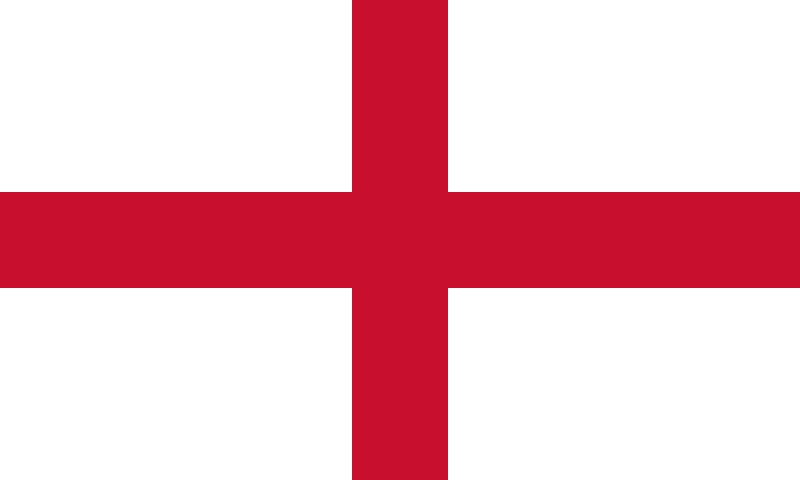
How can you tell England’s flag from the United Kingdom’s?
England’s St George’s Cross is a single upright red cross on white. The United Kingdom’s Union Flag combines that cross with white and red diagonals on blue. England and the UK therefore have distinct flags even when the same team or venue is described as British.
The design and its details
A red upright cross of Saint George on a white field.
| Collection | UK constituent countries |
|---|---|
| Adoption or design date | Medieval origins; no single modern adoption date |
| Geographic region | Europe · Northern Europe |
What the flag means
England is a constituent country of the United Kingdom. Its cross flag is distinct from the UK’s Union Flag and from royal standards.
| Element | Meaning or historical connection |
|---|---|
| Red upright cross | Saint George’s Cross, a longstanding English national and heraldic emblem. |
| White field | The plain background of the cross design. |
| Saint George association | A national patron-saint tradition, distinct from the three-lions royal banner and from the combined Union Flag. |
Compare the flags of England and Georgia (country)
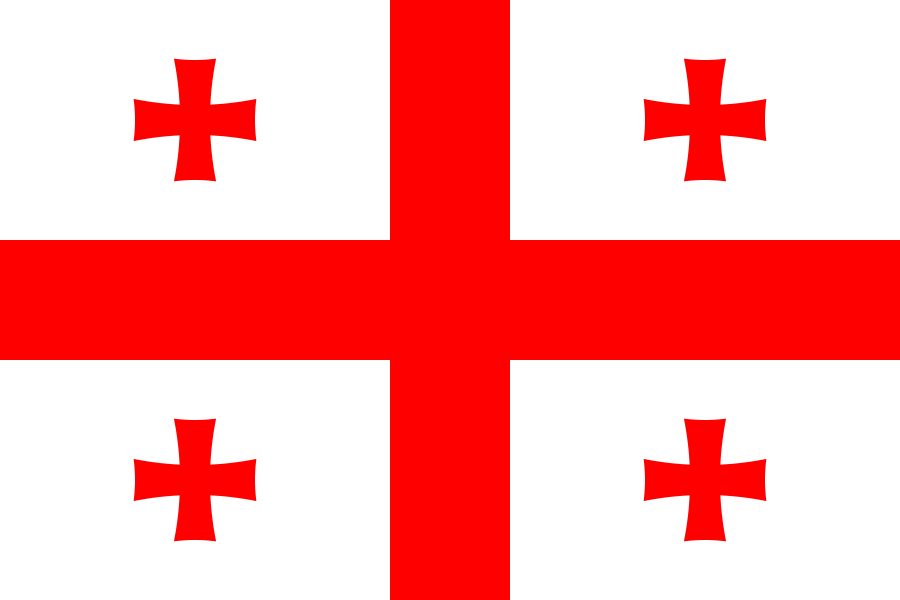
Both designs have a centered red cross on white. What fills the four quarters? In both drawings, the flagpole side is on the left.
Reveal the flag names and clues
A · England — All four white quarters are plain. The upright and horizontal arms of Saint George’s Cross reach the edges.
B · Georgia — One smaller red cross occupies each quarter. Together with the central cross they give the flag its five-cross name.
How the flag developed
Its use is older than the United Kingdom and should not be assigned a precise modern adoption date simply because it appears in a later law or sporting event.
The cross became a component of the first Union Flag in 1606 and remains part of the current Union Flag introduced in 1801. England also continues to use Saint George’s Cross separately in national, civic and sporting settings.
The main changes over time
Medieval period — National cross tradition
Saint George’s Cross became associated with England.
1606 — First Union Flag
The English cross joined the Scottish saltire.
1801 — Present UK flag
The red cross continued within the revised Union Flag.
Earlier designs and other uses
The royal banner with three lions is a different heraldic flag.
Download the flag
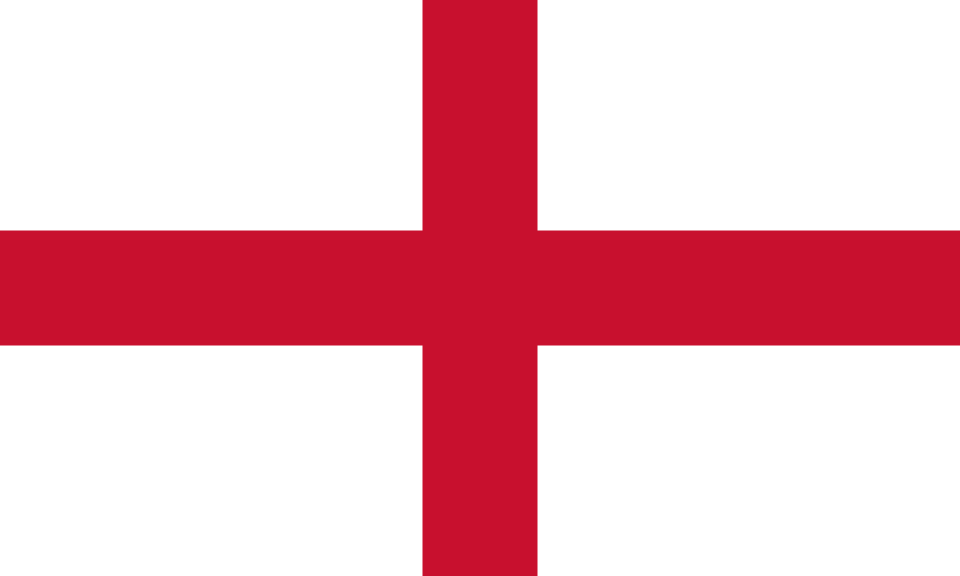
Artwork credit and reuse
Original: traditional Vector: Nicholas Shanks · Public domain. The PNG is a raster export of the credited SVG.


What Did We Learn Today?
One red upright cross reaches all four edges of white. The Union Flag adds diagonal crosses and blue areas.
Sources & Data Notes
View references and illustration credits
The dates distinguish adoption of the flag from later revisions to its artwork. The comparison uses the two illustrations at the same height, with the hoist on the left.
- Royal Household, The Union Jack — The Royal Household identifies England’s red St George’s Cross on white and explains its combination with the Scottish and Irish crosses in the Union Flag.
- England flag: history and source bibliography.
Illustration credits
- Flag of England.svg — Original: traditional Vector: Nicholas Shanks; Public domain.