National flag guide
Flag of Botswana: Meaning, Symbols and History
Botswana adopted its flag at independence from Britain in 1966, replacing the Union Flag used in the Bechuanaland Protectorate.
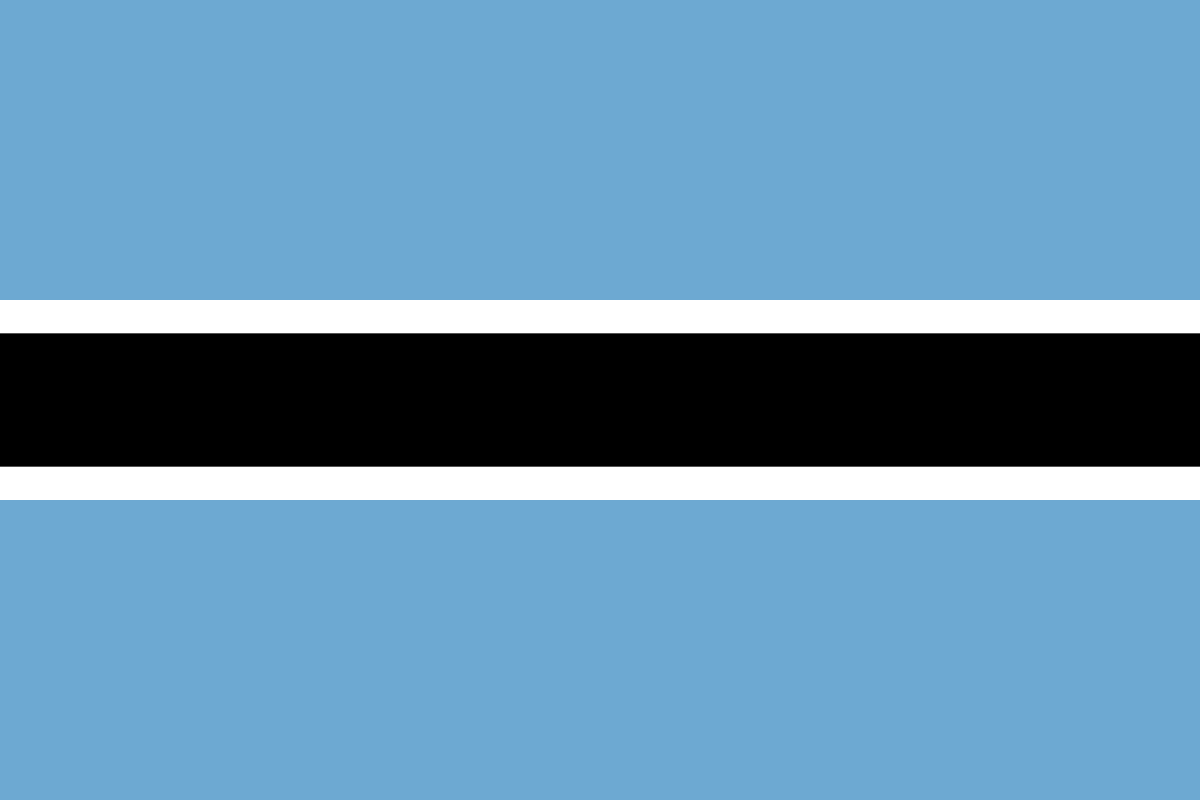
Light blue with a horizontal white-edged black stripe across the middle. Blue is associated with water and rain, also reflected in the national motto Pula. The black-and-white combination is a statement of coexistence rather than a count of ethnic groups. A narrow black horizontal stripe with white borders crosses a light blue field.
The design and its details
Light blue with a horizontal white-edged black stripe across the middle.
| Flag | Botswana |
|---|---|
| Collection | Country flags |
| Adoption or specification | 30 September 1966 |
| Browsing region | Africa · Southern Africa |
| Illustrated proportions (height:width) | 2:3 |
What the flag means
Blue is associated with water and rain, also reflected in the national motto Pula. The black-and-white combination is a statement of coexistence rather than a count of ethnic groups.
| Element | Meaning or historical connection |
|---|---|
| Light blue | Rain and water, especially valuable in the country’s dry environment. |
| Black and white | Coexistence among the people, also recalling the coloring of the zebra, a national animal. |
| Horizontal bands | A deliberately restrained national design rather than the party-derived colors common in some neighboring states. |
How the flag developed
Botswana adopted its flag at independence from Britain in 1966, replacing the Union Flag used in the Bechuanaland Protectorate. George Winstanley is credited with the design.
The pale blue field makes water central to the country’s national imagery in a landscape where rainfall is especially valuable. The black stripe bordered by white expresses racial harmony and also recalls the zebra colors used in the national arms. Unlike many independence-era African flags, Botswana’s design does not use the green-yellow-red Pan-African combination.
The main changes over time
Before 1966 — Bechuanaland Protectorate
British rule preceded the national design.
1966 — Independent Botswana
The light blue flag was adopted.
How to recognise this flag
A narrow black horizontal stripe with white borders crosses a light blue field. There is no star or coat of arms.
Earlier designs and other uses
The president’s standard is a separate official flag and should not replace the plain national design.
Questions about this flag
When was the flag adopted?
30 September 1966. An adoption date can refer to a design, its restoration or a later legal specification; the timeline above separates those stages.
What should I check before identifying an older example?
The president’s standard is a separate official flag and should not replace the plain national design.
What Did We Learn Today?
A narrow black horizontal stripe with white borders crosses a light blue field. There is no star or coat of arms. Its adoption and later changes reflect the national history described in the timeline, while older or specialist flags need their own labels.
Sources & Data Notes
This guide distinguishes first use, national adoption, restoration and later construction standards. Traditional or commonly reported interpretations are identified where they differ from a formal specification. It is a dated reference, not a live record of every change in official flag use.
- Archived World Factbook country record — background flag description and symbolic interpretations; later changes are explained above.
- Flagpedia: Botswana — flag artwork and comparison reference.
- Flag history reference and bibliography — chronology and links to underlying sources.
The main illustration preserves the selected flag artwork’s proportions; these are a reproduction guide, not a substitute for a legal construction drawing. Color names group shades for browsing.
Current flag artwork is supplied with the original flag collection; the package’s artwork register contains provenance and license details.