Flag Explorer
Afghanistan’s Flag Today and the Former Republic Flag
Afghanistan has changed national flags repeatedly through monarchy, republics, communist governments, civil conflict and different Taliban administrations.
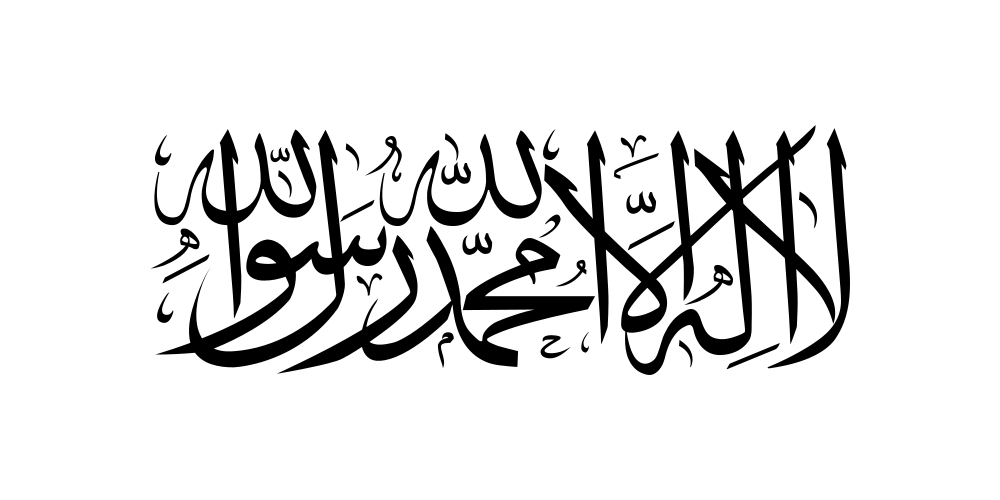
Which flag is used in Afghanistan today?
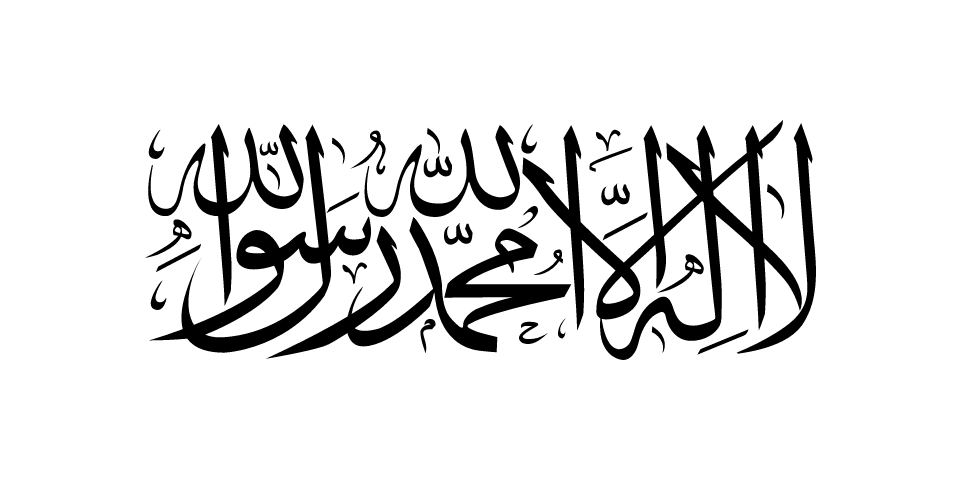
Since August 2021 the de facto authorities have flown a white flag bearing the shahada in black. The former republic’s black, red and green tricolor still appears in diplomatic and diaspora settings. The institution flying the flag and the date of the photograph help identify which usage is shown.
The design and its details
A white field bearing the Shahada, the Islamic declaration of faith, in black Arabic calligraphy.
| Collection | Country flags |
|---|---|
| Adoption or design date | White flag used by the de facto authorities since 2021 |
| Geographic region | Asia · Southern Asia |
| Illustrated proportions (height to width) | 1:2 |
| Version shown | White flag used by the de facto authorities |
What the flag means
The inscription is the shahada, the Islamic declaration of faith. No universal secular meaning for the white background should be invented. Displaying a flag in an educational collection does not determine diplomatic recognition.
| Element | Meaning or historical connection |
|---|---|
| White field | The plain field of the flag used by Afghanistan’s de facto authorities, with roots in the Taliban movement’s flag tradition. |
| Black inscription | The shahada, the Islamic declaration of faith. The text is the defining element; it should not be replaced by decorative imitation lettering. |
| Choice of design | The white flag and the former republic’s tricolour belong to different political contexts. Continued diplomatic or diaspora use of the tricolour does not make the two designs interchangeable. |
Compare the flags of Afghanistan and Saudi Arabia
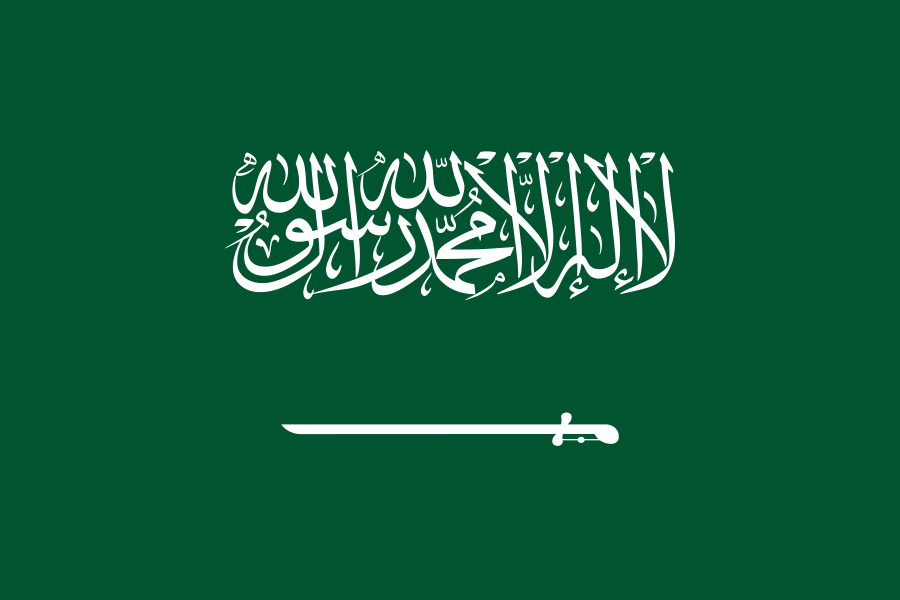
Both designs include the shahada. What else appears on the illustrated face? In both drawings, the flagpole side is on the left.
Reveal the flag names and clues
A · Afghanistan — Black calligraphy sits on white on the flag used by the de facto authorities. There is no sword beneath it.
B · Saudi Arabia — The inscription is white against green and a horizontal sword lies below it. The sword remains a clue when the script is hard to read.
How the flag developed
Black-red-green tricolours became a recurring twentieth-century family, but their emblems, proportions and political meanings changed with the governments using them.
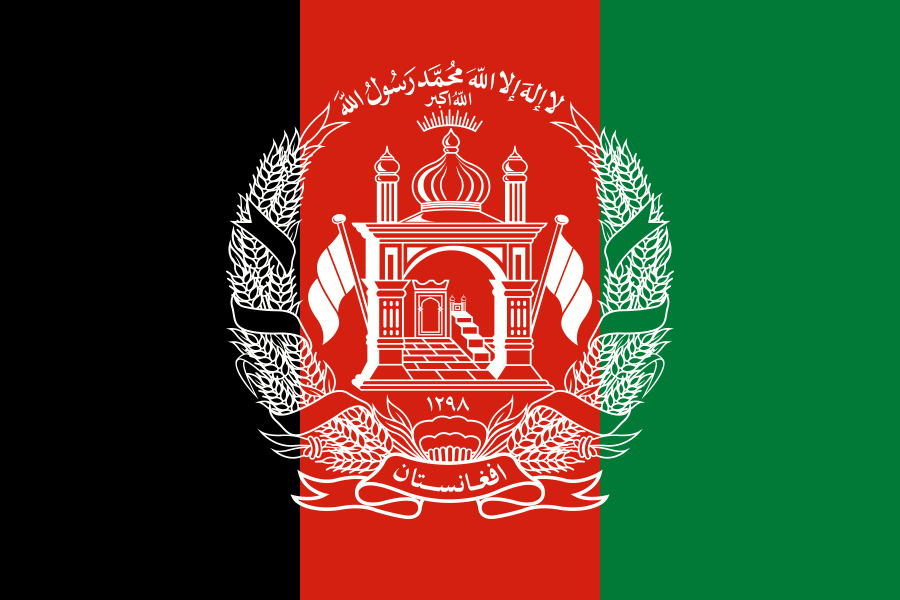
The former Islamic Republic used a vertical black-red-green tricolour with a detailed white national emblem. After the Taliban took power in 2021, the de facto authorities used a white flag bearing the shahada in black. The republic’s tricolour continued in some international and diaspora contexts. A careful guide therefore identifies the user and context of each design instead of treating every image labelled “Afghanistan” as interchangeable.
The white flag also has an earlier Taliban-era history in the 1990s. Its return in 2021 was a restoration of a political design, not the beginning of Afghanistan’s flag history. For diplomatic or ceremonial use, the relevant institution’s current practice should be checked separately from the flag used by the authorities controlling the country.
Why a single current image needs context
Afghanistan has changed flags repeatedly as monarchies, republics, socialist governments and religious authorities replaced one another. A guide that gives only the latest image can conceal this unusually complex national history.
The explorer displays the white flag used by the de facto authorities, while retaining the former republic’s black-red-green tricolour as a labelled variant. Diplomatic representation, opposition activity and diaspora events can use different symbols at the same time. Those uses should be attributed to the relevant institution or community rather than described as a universally agreed single practice.
The shahada is a religious declaration, and its calligraphy must remain readable. Mirroring the artwork produces a different visual result from a correctly made reverse side. The flag file is useful for recognition and study; it should not be treated as evidence that every authority or international body uses the same flag in every setting.
The main changes over time
Twentieth century — Black-red-green traditions
Successive states used different tricolours and national emblems.
1990s — Earlier Taliban white flag
The white shahada design developed under the first Taliban administration.
2004–2021 — Islamic Republic tricolour
The republic used black-red-green with its national emblem.
2021 — White flag returns
The de facto authorities returned to the white shahada flag.
Historical flags in pictures
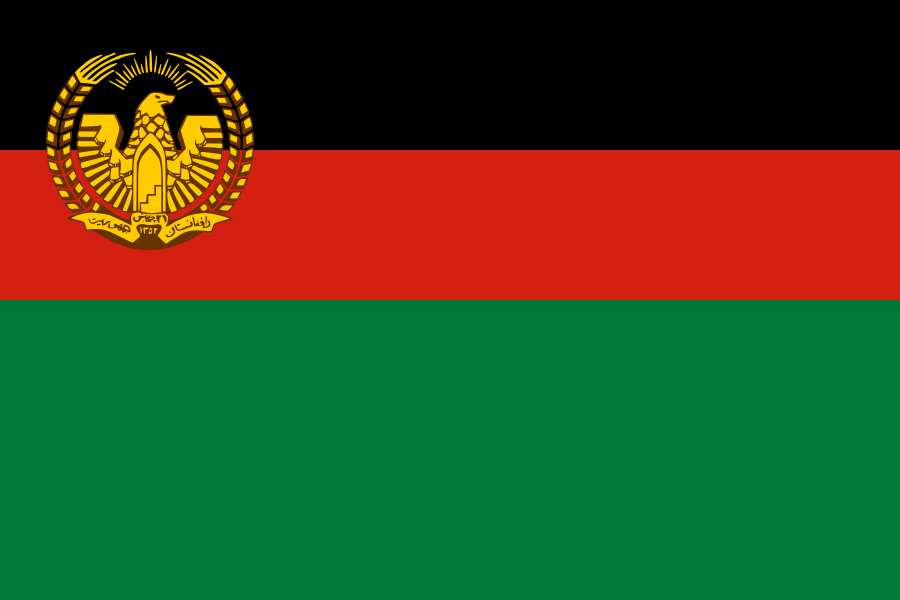
Earlier designs and other uses
The republic tricolour and white flag must be labelled by user and period. Calligraphic details can also vary between white-flag reproductions.
Compare the illustrated versions
Download the flag
Artwork credit and reuse
SVG by Lexicon · Public domain. The PNG is a raster export of the credited SVG.


What Did We Learn Today?
The primary image here is white with black calligraphy and no colored stripes. The former republic’s black-red-green tricolour is shown as a separate historical and international-use variant.
Sources & Data Notes
View references and illustration credits
The dates distinguish adoption of the flag from later revisions to its artwork. The comparison uses the two illustrations at the same height, with the hoist on the left.
- Associated Press, Kabul presidential palace flag-raising, September 2021 — The report documents the Taliban raising its white flag over the presidential palace in Kabul in September 2021. It identifies the authority displaying it and the setting.
- Flagpedia: Afghanistan — flag artwork and comparison reference.
- Flag history reference and bibliography — chronology and links to underlying sources.
Illustration credits
- Flag of Afghanistan (1974–1978).svg — Orange Tuesday (talk) at en.wikipedia.; Public domain.
