A week in Thailand can look very different on opposite coasts. If your dates are set but your island is not, compare Phuket and Koh Samui before you book: September generally favors Samui for lower rainfall, while November favors Phuket.
November through February is a useful starting window for Bangkok and northern Thailand. For a Phuket beach trip, December through March is usually drier. Koh Samui’s driest month is February, and it generally gets less rain than Phuket from April through September. Both islands are wet in October.
How to use this article: Check the two-island rainfall calendar, work through a September beach week, or see why November sends you to the other coast.
1. When to Visit Each Part of Thailand
Bangkok: Start with November through February if your plans include temple grounds, markets and long stretches outdoors. This is typically a drier and relatively cooler part of the year. Bangkok can still feel hot; “cool season” is a comparison with the rest of its year, not a promise of cool afternoons.
Chiang Mai and northern Thailand: The same months are a useful starting point when outdoor time matters. The northern highlands can feel noticeably cooler than Bangkok, particularly early in the day. Temperature and air quality are separate questions: check local conditions before a trip built around hiking, rather than assuming a dry month is clear.
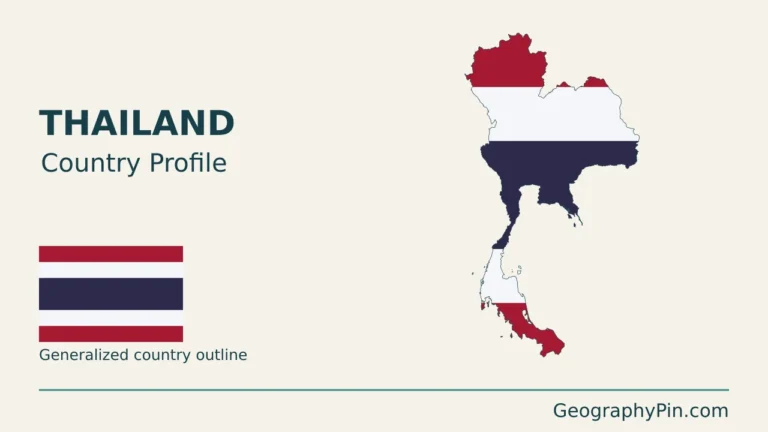
Phuket and Koh Samui: Phuket faces the Andaman Sea on the west side of the Thai peninsula. Koh Samui sits in the Gulf of Thailand on the east side. If your trip starts in Bangkok and ends on a beach, do not automatically apply the Bangkok season to the island. The Thailand country profile puts both coasts and the northern highlands in geographic context.
2. Phuket vs. Koh Samui: Rainfall by Month
The two-island rainfall calendar
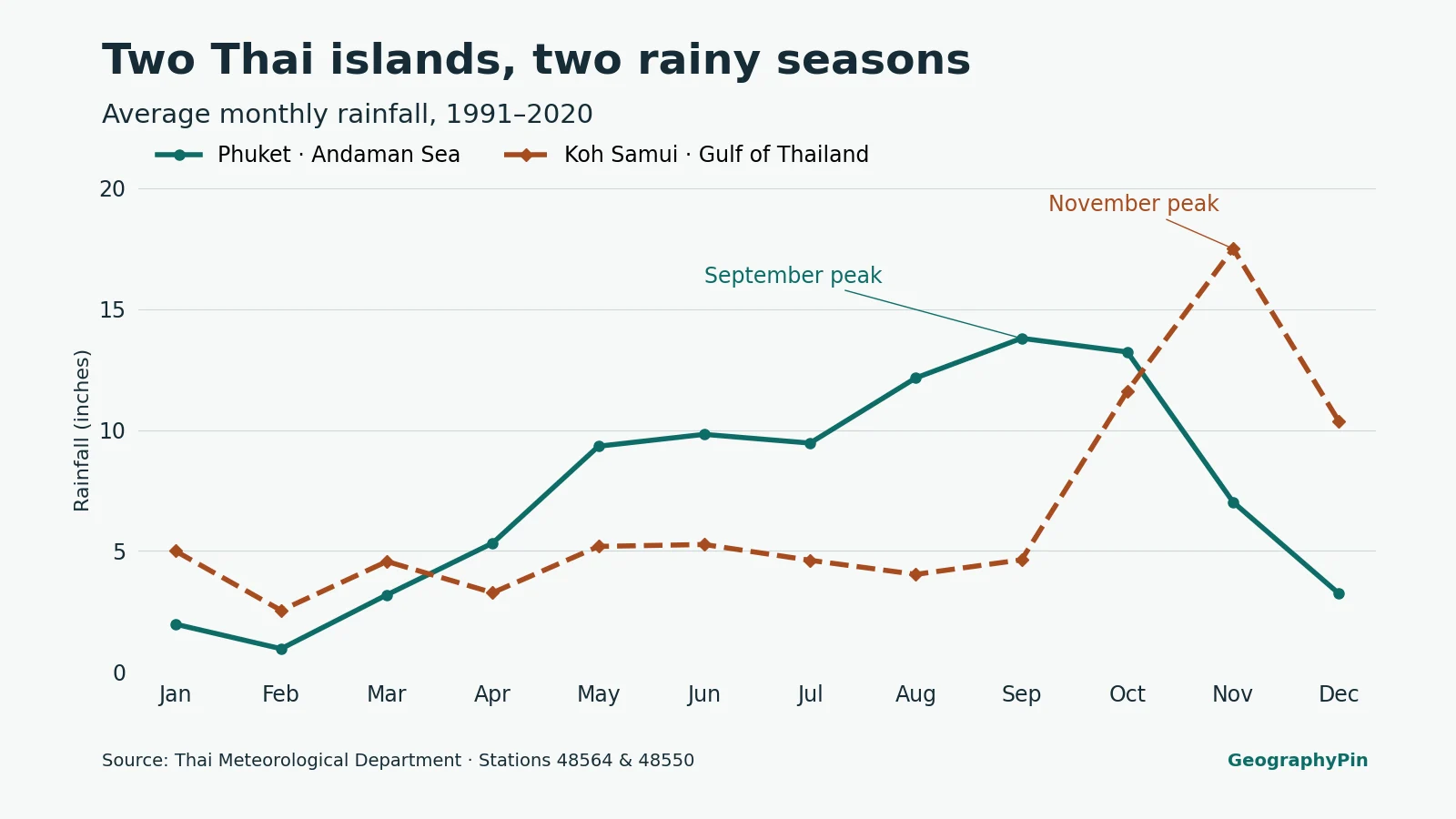
In February, both stations reach their lowest average monthly rainfall. From April through September the Koh Samui station records less rain than the Phuket station in every month. October is not a clean escape from rain; both stations average more than 11 inches (279 mm). In November Samui overtakes Phuket and reaches its yearly peak.

| Month | Phuket town | Koh Samui |
|---|---|---|
| January | 2.0 in (49.9 mm) | 5.0 in (126.8 mm) |
| February | 0.9 in (24.0 mm) | 2.5 in (64.3 mm) |
| March | 3.2 in (80.7 mm) | 4.6 in (115.8 mm) |
| April | 5.3 in (135.1 mm) | 3.3 in (82.9 mm) |
| May | 9.3 in (236.9 mm) | 5.2 in (131.6 mm) |
| June | 9.8 in (249.4 mm) | 5.3 in (133.6 mm) |
| July | 9.5 in (240.2 mm) | 4.6 in (117.0 mm) |
| August | 12.2 in (308.7 mm) | 4.0 in (102.2 mm) |
| September | 13.8 in (350.4 mm) | 4.6 in (117.5 mm) |
| October | 13.2 in (336.0 mm) | 11.6 in (294.9 mm) |
| November | 7.0 in (178.2 mm) | 17.5 in (444.6 mm) |
| December | 3.2 in (82.0 mm) | 10.4 in (263.1 mm) |
Use the table to compare the islands, not to predict a particular week. A monthly total does not tell you how often it rains, how long a downpour lasts, or whether the sea will be calm. It also represents one station on each island, not every beach.
3. If Your Vacation Dates Cannot Move
One week in September: Start with Koh Samui
For a seven-night beach trip with flexible destinations and rainfall as the deciding factor, start with Samui. Phuket town averages 13.8 in (350.4 mm) for the month; Ko Samui averages 4.6 in (117.5 mm). That is a large enough historical difference to guide the choice without pretending either station can forecast seven days.
If you already booked Phuket, keep the day for the boat trip flexible rather than assuming a certain time of day will be dry. If Phang Nga Bay is part of the plan, the James Bond Island boat-access guide shows where the trip takes you.
One week in November: Start with Phuket
For those same seven nights moved to November, pick Phuket if lower rainfall is the priority. Phuket town averages 7.0 in (178.2 mm) and Ko Samui 17.5 in (444.6 mm). Phuket is the drier of the two on average, but its November normal is still well above its February normal.
If a ferry is your only way to reach an onward flight, allow room in the itinerary for a schedule change. Before a crossing or excursion, check the Thai Meteorological Department’s shipping forecast for the correct coast and ask the operator whether the service is running. Rainfall averages cannot answer that question.
4. Why the Coasts Have Different Rainy Seasons
The southwest monsoon carries moist air from the Indian Ocean toward Thailand. Phuket is on the Andaman side, facing that source of moisture, so it gets much of its rain during the middle of the year and into early fall. When the northeast monsoon arrives, upper Thailand generally becomes cooler and drier. In the south, however, that flow can cross the Gulf, pick up moisture, and bring rain to the Gulf-facing side. That helps explain why Samui’s rain peaks later than Phuket’s.
A change in the prevailing wind is not a switch that flips on the first day of a month. Treat the peak months as a planning pattern, not an official start or end date for storms.
Frequently Asked Questions
Can the sea be rough during a drier month?
Yes. Wind and thunderstorms can affect sea conditions even during a historically drier month. The marine forecast and the operator’s advice are the relevant checks for a particular trip.
Can I use the Koh Samui figures for Koh Phangan or Koh Tao?
The chart helps explain the region’s seasonal pattern, but the figures are observations from the Ko Samui station. Use local forecasts for the other islands and for the waters your trip crosses.
What Did We Learn Today?
Start with the region, not a single season for the whole country. November through February is a useful window for Bangkok and northern Thailand, while Phuket and Samui can trade places as the better rainfall choice. With fixed island dates, use the monthly figures for planning and the local marine forecast for the day you go.
Sources & Data Notes
Weather stations, monsoons and photo credit
Measurements are 1991–2020 climate normals. Phuket uses the town station, not the airport. Charts use the original metric values converted to inches before rounding; 1 in = 25.4 mm. The Phuket and Ko Samui station names follow the weather department’s dataset. The spelling “Ko Samui” denotes the same island as “Koh Samui.”
- Thai Meteorological Department: Climatological Data for the Period 1991–2020, printed pages 71 (Ko Samui station 48550) and 82 (Phuket town station 48564).
- Thai Meteorological Department: Climate of Thailand, for the regional seasons and prevailing monsoons; Shipping Weather Forecast, for current marine conditions.
- Cover: Radek Kucharski, Kata Beach, December 2023, CC BY 2.0; resized and re-encoded.