Baku’s Old City and central waterfront fit naturally into a short visit, but the whole city does not fit into one walking circuit. Three days let you enjoy those central areas and choose between a modern architectural outing and a separate road excursion.
Three days without crossing the city all day
Plan three days in Baku around the Old City, the Carpet Museum and waterfront, then either the Heydar Aliyev Center or a separately arranged Gobustan excursion. Keep each day compact, reorder around museum closures and leave time for transfers. This itinerary does not override current advice to reconsider travel to Azerbaijan.
Practical information checked: November 18, 2026. Museum schedules, transit arrangements and advisories can change.
Before booking: the U.S. advisory issued April 28, 2026 rates Azerbaijan Level 3: Reconsider Travel, citing terrorism, armed conflict and landmines. It does not exempt Baku. Assess that advice before committing to the visit; a central sightseeing plan is not a safety clearance.
How to use this article: Start with the day-by-day choices, compare places to base yourself, or check the metro interruption.
1. Give each of your three days a different focus
Baku is Azerbaijan’s capital on the Caspian Sea. For its wider setting, see Baku’s location and city geography. For a visit, the useful distinction is between the central heritage-and-waterfront cluster and outings that need their own transport.
A compact three-day plan
| Day | Main focus | Keep optional |
|---|---|---|
| 1 | Old City lanes, Palace or Maiden Tower interior | A short central waterfront walk |
| 2 | Carpet Museum and nearby boulevard | Highland Park as a separate uphill outing |
| 3 | Heydar Aliyev Center and relaxed city time | Replace the city day with Gobustan, not both |
Count three usable days, not arrival and departure dates that leave only a few hours. Treat this as a sequence of priorities you can swap: museum opening days and the weather should decide which calendar date gets each activity.
With two days, keep the Old City and museum-waterfront days, dropping the excursion. If modern architecture matters more than carpets, replace that museum visit with the Center rather than adding another cross-city journey. With one day, choose the Old City, one paid interior and a short waterfront segment.
2. Walk the Old City, then choose a monument interior
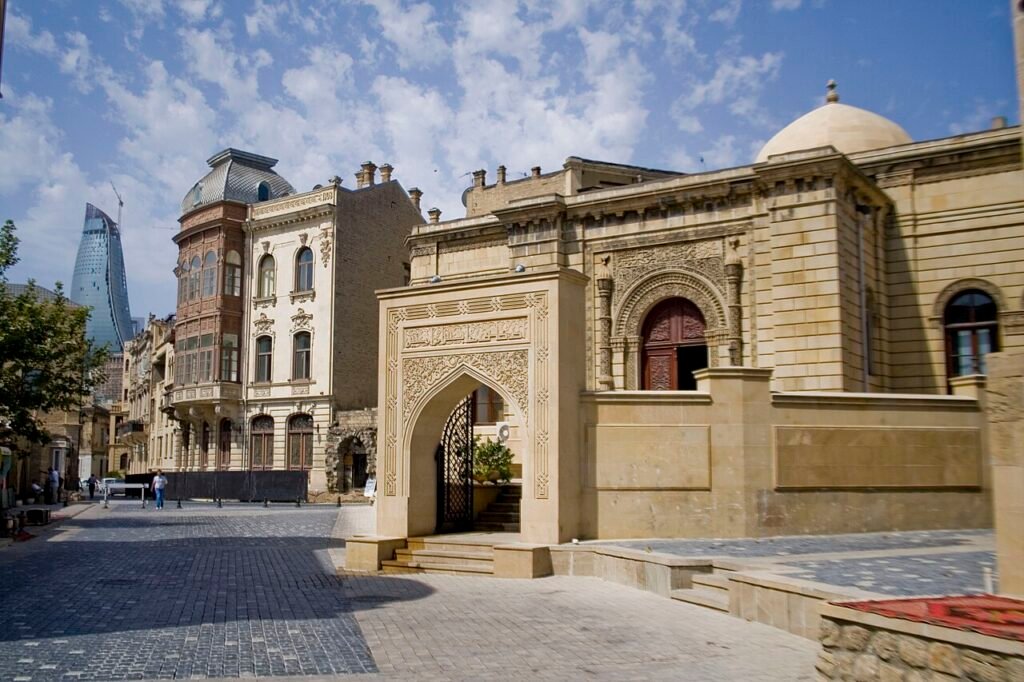
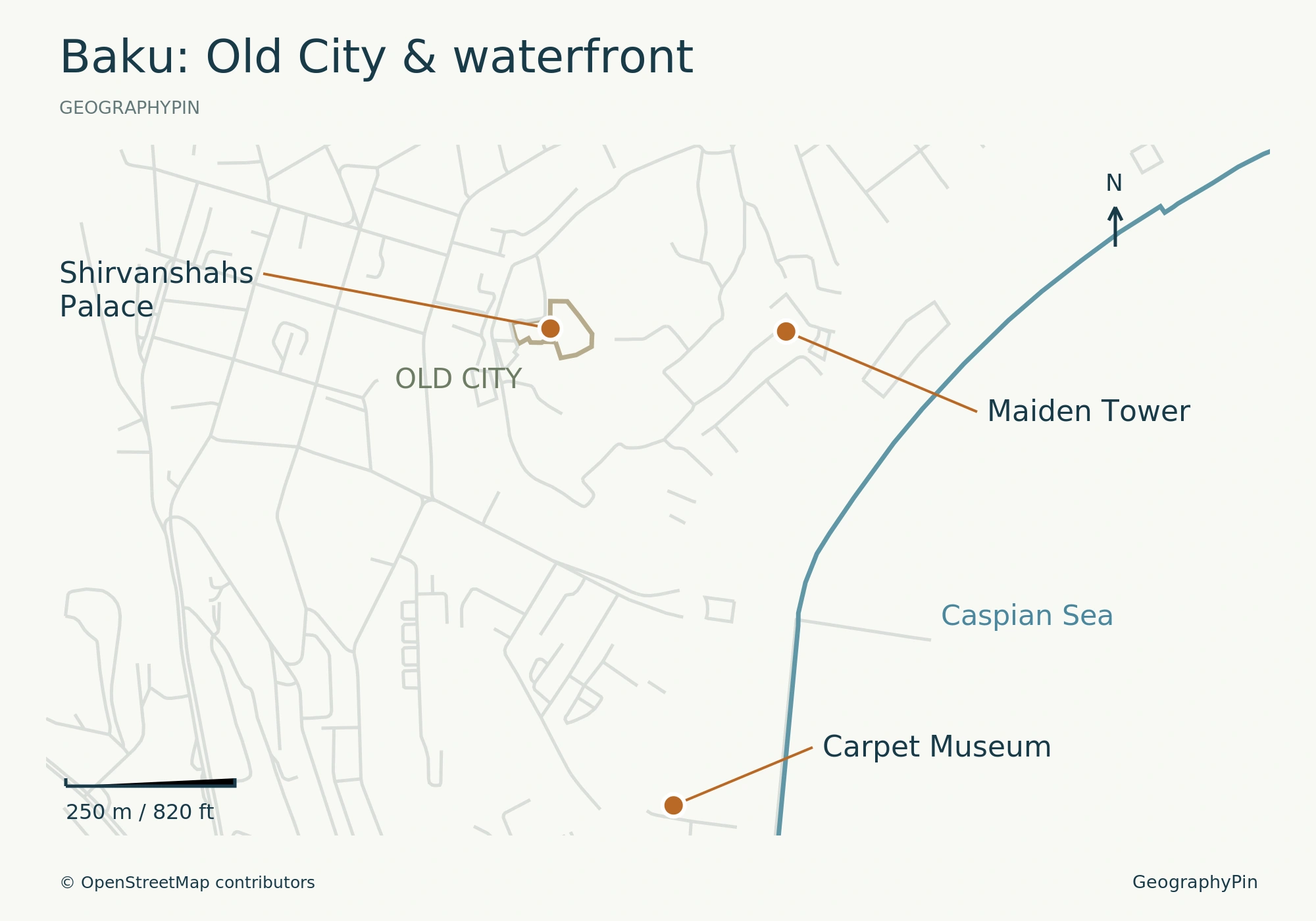
The UNESCO-listed walled city, Icherisheher, is a neighborhood of streets and homes as well as the Shirvanshahs’ Palace and Maiden Tower. Leave space to walk its lanes rather than moving only between ticket counters. That is also what makes this day different from a sequence of modern museums.
The reserve administration’s museum page, checked November 18, lists both the Palace and Maiden Tower as ticketed attractions open daily from 10 a.m. to 7 p.m. These are separate interiors, not evidence of a single admission covering the whole Old City.
Choose the Palace if you want a complex of buildings and courtyards; choose the Tower for a multilevel landmark rather than a palace complex. The operator describes eight levels in the Tower, so visitors concerned about vertical circulation should establish what is accessible before buying a ticket. A photograph of the exterior does not answer that question.
Keep lunch and a break within the day rather than pushing them after a second museum. If you still have energy, finish with a selected central stretch of waterfront. If not, the boulevard has its own place in the following day’s plan.
3. Pair the Carpet Museum with a short waterfront walk
The Azerbaijan National Carpet Museum’s visitor page lists the Baku exhibition as open Tuesday–Friday, 10 a.m.–7 p.m., and Saturday–Sunday, 11 a.m.–8 p.m., checked November 18. It is closed Monday. The ticket desk closes one hour before the exhibition. Put this visit on a different day if your second day falls on Monday. These are not the separate jewelry collection’s hours.
The Tourism Board’s boulevard guide places the museum among the waterfront’s attractions and green spaces. Select a nearby segment to enjoy after the galleries, rather than setting yourself the task of covering the entire promenade. The point is a change of pace, with time outdoors, not a distance target.
Highland Park adds an elevated view over the city and bay, but it is a separate uphill decision. The tourism page mentions driving and a funicular; it does not establish today’s funicular operation or a continuous step-free route. If the viewpoint matters to you, arrange the ascent and return on their own terms.
For anyone limiting walking or managing a stroller, decide the endpoint before leaving the museum. Choose a place to pause and a return option instead of assuming that an attractive waterfront line on the map is an effortless walk in either direction.
4. Keep the third day in Baku or go to Gobustan
The Heydar Aliyev Center is the choice for a modern architectural focus. Treat it as a dedicated outing, with transport from your base and time for the exhibition you actually want to see. Its official ticket information lists the Classic Car exhibition separately from museum-and-exhibition admission, so choose the ticket for the collection you intend to see. Opening hours still need a separate check.
Then return to whichever central area you enjoyed most, or leave the afternoon uncommitted. A third day in the city can be useful precisely because it lets you revisit something without moving through another long list.
Gobustan’s rock-art landscape is the alternative for that day, not an extra downtown stop. It lies roughly 37 miles (60 kilometers) south of Baku and needs a separately arranged road journey. Its interest is the rock art and archaeological setting; a trip there changes both the scale and the transport demands of the day.
Before choosing that option, establish reserve admission, the actual pickup and return arrangements, and which sites are included. Do not assume that a rock-art visit includes access to any particular mud-volcano site. Leave the Center for another visit if the excursion takes your available day.
If a pink-lake photograph is tempting you out of the city, read Masazir Lake and access checks first. Its salt-working landscape does not come with a confirmed public shoreline viewpoint or a guaranteed pink-water display, so keep it an optional stop rather than a fixed itinerary promise.
5. Choose a base for the way you will spend your time
Choose the doorstep, not just a hotel’s district label
These are base-area tradeoffs, not hotel recommendations or a ranking of the safest neighborhoods. Compare the exact entrance and arrival route of a property before using a broad neighborhood name as shorthand for convenience.
| Area | Useful emphasis | Check at the property |
|---|---|---|
| Old City or its edge | Heritage sights near your base | Vehicle drop-off, entrance steps and luggage route |
| Fountain Square / Nizami Street | Central city time between outings | Exact address and street noise |
| Central waterfront / Sahil side | Promenade-focused stay | Road crossings and access to the actual entrance |
| 28 May area | Airport-bus and railway convenience | Distance from your intended sightseeing cluster |
Nizami Street is not Nizami metro station. Check the pin rather than choosing a base from the shared name. Likewise, an address advertised as near the sea may not put its entrance directly on the promenade.
If stairs or uneven surfaces affect your plans, ask about the whole arrival chain: vehicle drop-off, the pavement approach, entrance, lift and room. A general “accessible” label does not explain which parts of that chain work for your needs.
6. Arrive at the right station and use the current metro plan
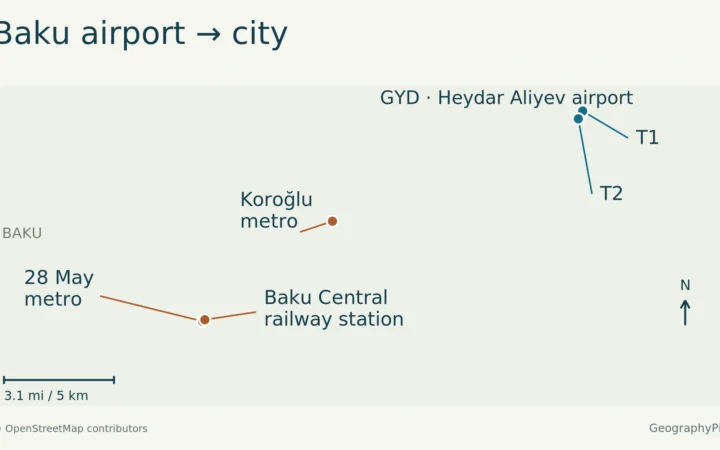
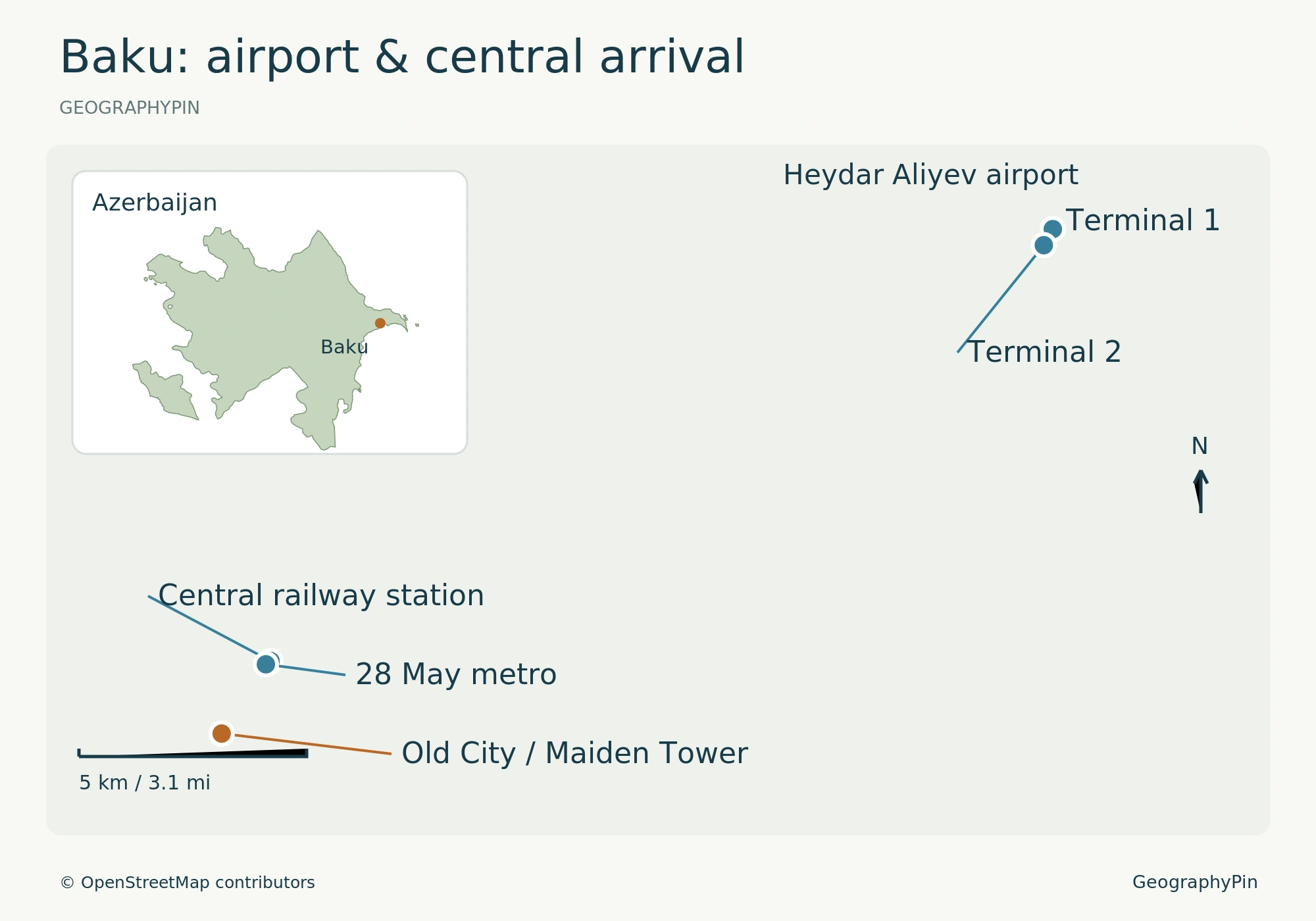
The airport’s Aero Express information lists service from Terminals 1 and 2 to Baku Railway Station at 28 May metro, via Koroglu. It does not terminate at the Old City. Plan the last leg to your accommodation and consult the airport’s current departure and payment information on arrival. For terminal, baggage and connection checks, compare the Baku airport arrival options.
The airport terminal, central railway station and International Bus Terminal are different places. Save the actual departure point for an onward ticket, and allow for baggage collection and the transfer rather than calculating a connection from flight landing time alone.
The Nizami–28 May connection is interrupted
On November 18, 2026, the metro operator’s route-change page reports suspended train movement between Nizami and 28 May during line-separation works, with supporting express buses. Its operating diagram keeps the Red Line on the İçərişəhər–Həzi Aslanov route and the Green Line on Dərnəgül–Nizami. Do not plan from an old uninterrupted network map.
Use the operator’s current planner for your date and starting station. For a separate Center visit, an uphill outing or a luggage-heavy last leg, compare a road transfer with the available transit connection rather than assuming every sight belongs to the same walk.
If Baku is one part of a longer journey, the Azerbaijan travel guide covers regional itinerary choices, entry and border distinctions. Confirm those arrangements before adding a second country or regional stay to these three city days.
7. Leave the waterfront flexible for weather and events
Azerbaijan’s national hydrometeorological service identifies Baku, Absheron and the Caspian as especially windy areas. Pack a wind-resistant layer and keep the longer waterfront block movable. Check official forecasts and warnings shortly before the visit rather than treating a seasonal description as your day’s forecast.
For a walking-focused visit, I would choose spring or autumn, with indoor alternatives still in reserve. In warmer weather, move the longest outdoor block away from the part of the day you find most uncomfortable; in poor weather, shorten it rather than forcing the itinerary’s original order.
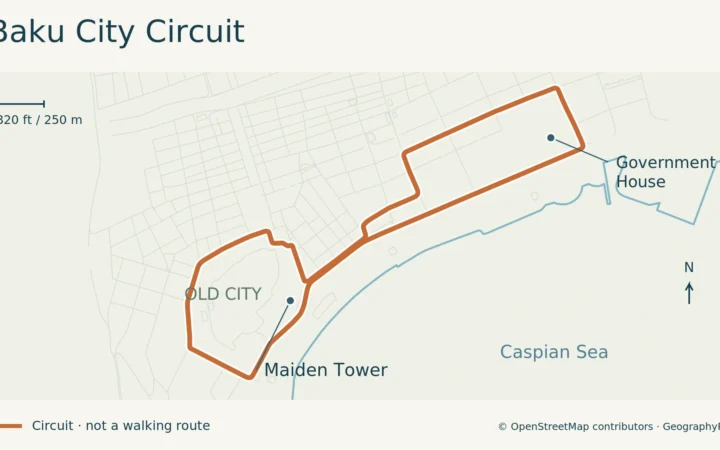
Large events can change the usefulness of a central base. If your dates overlap a race or another major event, check the organizer’s current street-access notices and ask your accommodation about the arrival route. A previous year’s closure map is not a reliable plan for the next event. See the Baku City Circuit and race-week checks for track orientation and the official event handoff.
What Did We Learn Today?
Three days in Baku work best as distinct choices: Old City, museum and waterfront, then a modern-city outing or a separate excursion. Choose a base by its actual arrival route, keep walking plans flexible and use the current transit diagram. Fewer competing stops leave more time to enjoy the places you chose.
Sources & Data Notes
View visitor and transport sources
Checked November 18, 2026. The three-day sequence and base-area comparison are editorial planning choices, not timed tours or accessibility audits. Old City museum hours and metro changes come from their operators. Verify museum admission, temporary closures and transport before a specific visit; no funicular timetable, Center ticket price or Gobustan opening time is assumed.
- U.S. State Department: Azerbaijan travel advisory
- Icherisheher administration: museum hours and access
- UNESCO: walled city of Baku
- National Carpet Museum: plan your visit
- Heydar Aliyev Center: official program and tickets
- Tourism Board: boulevard visitor context
- Tourism Board: Highland Park
- Tourism Board: Gobustan rock art
- Heydar Aliyev Airport: Aero Express
- Baku Metro: Nizami–28 May route change
- National Hydrometeorological Service: wind and climate
- National Hydrometeorological Service: forecasts and warnings
- Tourism Board: Baku visitor overview
Photo: Baku Old City, İhsan Deniz Kılıçoğlu (NeoRetro), July 26, 2011; CC BY-SA 3.0. Resized by Wikimedia Commons; cropped for display.
Maps: GeographyPin, using © OpenStreetMap contributors, ODbL, retrieved November 18, 2026. Country inset: Natural Earth Admin 0 Countries 5.1.1, public domain. Building/site positions are not entrances or bus bays. The local map does not certify a walking route; the wider map does not show a bus or metro route. The generalized country inset is not a claim about recent boundary delimitation.