The tallest walls at Great Zimbabwe are still standing, but many of the homes they once surrounded are gone. Look beyond the stonework and the ruins tell a fuller story: people farmed, worked metal, and acquired goods that had crossed the Indian Ocean before reaching this inland city.
Great Zimbabwe was built by local African communities ancestral to today’s Shona peoples. It became the capital of a powerful state on the Zimbabwean plateau. Archaeologists trace its history through generations of local pottery and house floors, dry-stone walls built in stages, and imported goods that reached the city through long-distance trade.
How to use this article: See how the walls stand, follow what a Ming porcelain find can date, or learn why a carved bird returned in 2026.
Where Great Zimbabwe stood
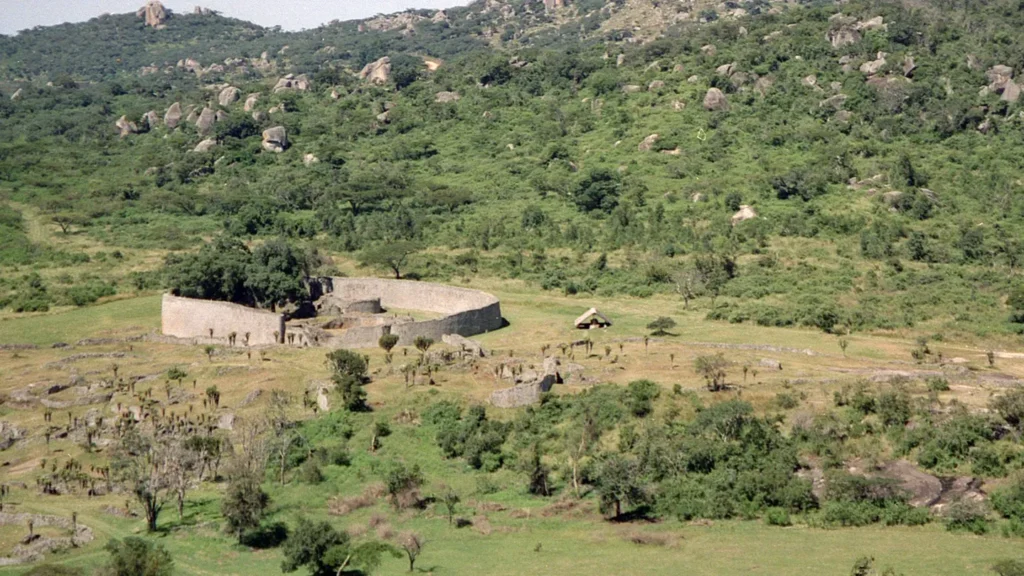
Great Zimbabwe lies near Masvingo in southeastern Zimbabwe, on the high ground between the Zambezi and Limpopo river systems. The ruins are not the country’s modern capital or a single fortress. They are the remains of a city that spread across a hill, the valley below it, and nearby settlements. The modern country of Zimbabwe takes its name from the site.
The city rose as a political center in the second millennium CE. Excavations indicate occupation from the 11th into the 17th century, though not all parts were occupied at the same time. UNESCO inscribed the site as Great Zimbabwe National Monument in 1986.

From the granite hill to the Great Enclosure
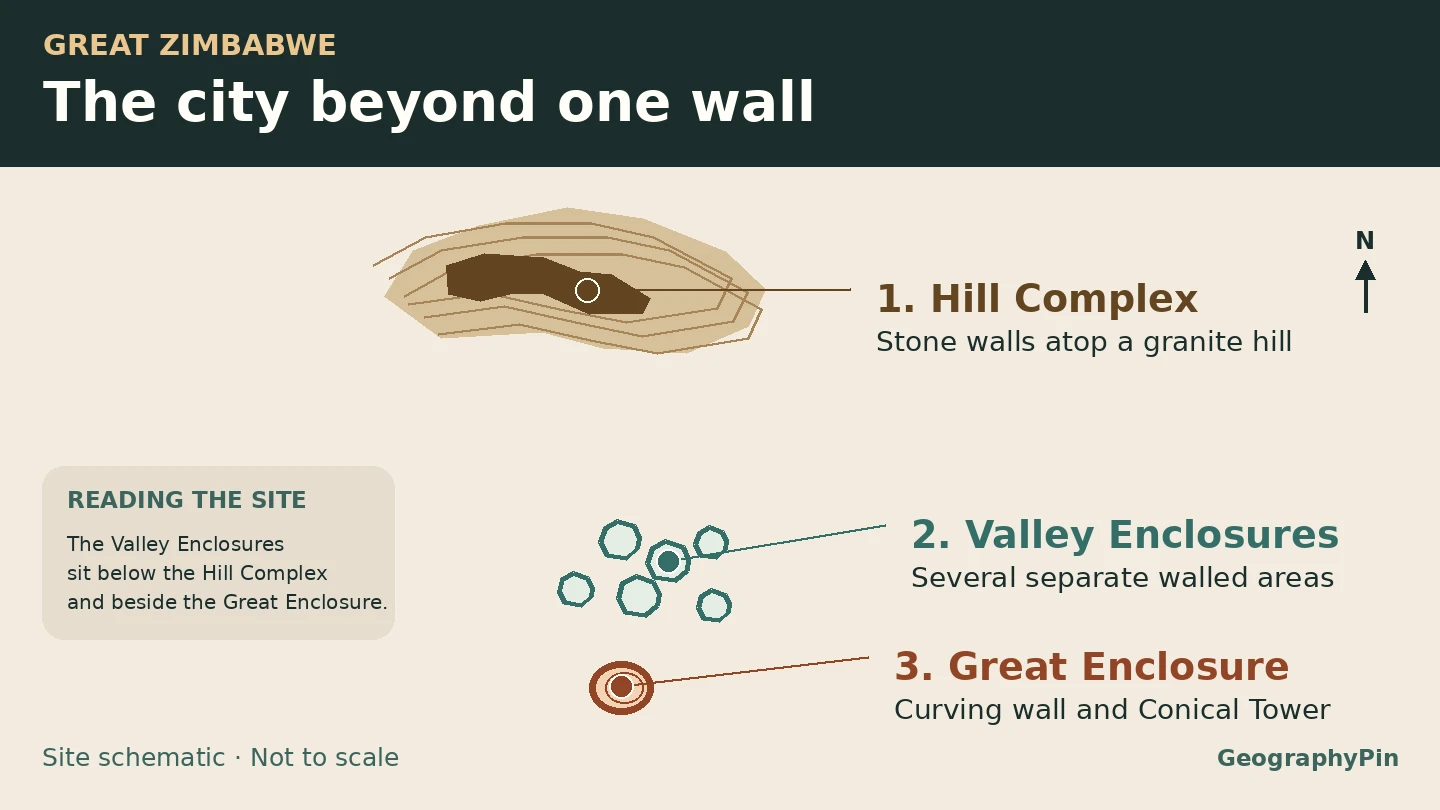
The Hill Complex and the houses below it
On the northern hill, builders used existing granite boulders as part of the setting for walls and terraces. Excavated layers of floors show that people lived on the hill before some of its stone walls went up. The Hill Complex also includes places that remain spiritually important to local communities.
Below it, the Valley Enclosures are several separate groups of ruins. Archaeologists found earthen walls and floors there and elsewhere at the site, including traces of homes and granaries. The earth, known as dhaka, survives less visibly than the granite. Some large pits in the landscape may also have collected and stored water, a use proposed by researchers studying their soils and position near springs. That interpretation does not give the pits a secure construction date.
How the Great Enclosure’s walls stand without mortar
The Great Enclosure sits south of the Hill Complex. Its outer wall reaches about 36 feet (11 meters) at its highest point and runs about 830 feet (252 meters) around the enclosure. Granite from nearby outcrops could be broken into flat pieces and laid in courses without mortar. The wall is broader at its base and narrower at the top. A second wall inside it forms a tight passage toward the Conical Tower.
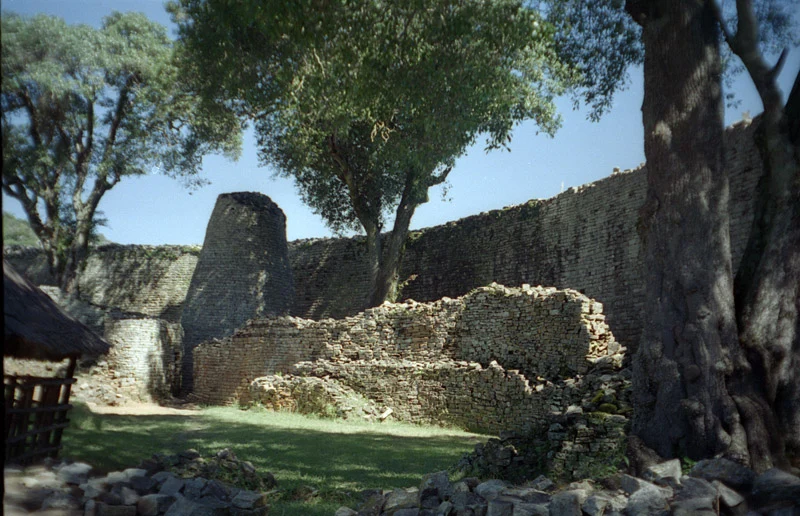
House floors show that at least some of the enclosure was lived in. What they do not settle is whether the whole complex had a single purpose. Researchers have proposed elite residential and ceremonial uses. The Conical Tower is solid, and its resemblance to a grain bin has prompted interpretations about wealth or authority, but resemblance is not proof of its function.
How a piece of Ming porcelain reached an inland city
What the Ming porcelain can date
Archaeologists found a piece of blue-and-white Chinese porcelain in a sealed layer of the Western Valley Enclosure. They identified it with the Hongzhi reign of the Ming dynasty (1488–1505). That range dates the manufacture of the object, not its arrival in Zimbabwe. A layer containing it could not have formed before the porcelain existed. The find is evidence that part of the valley was still occupied later than older accounts of a citywide abandonment suggested. It does not date the walls around the deposit.
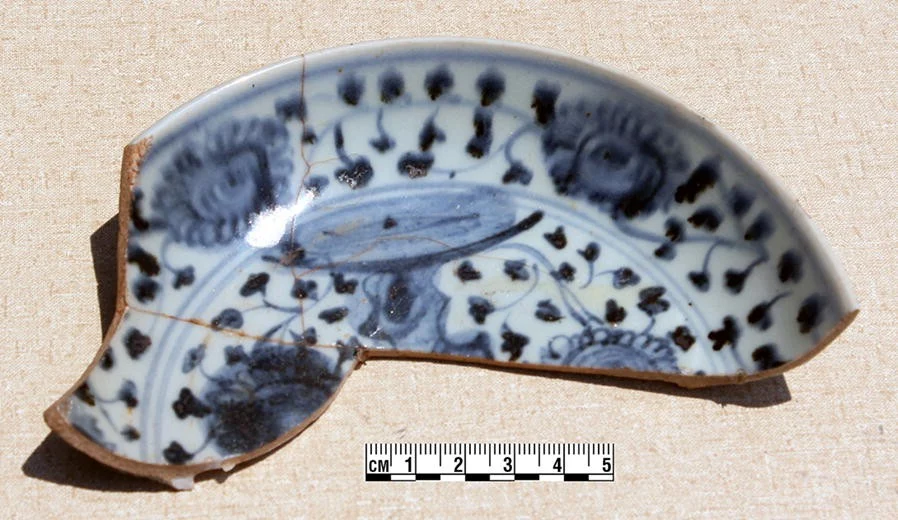
Chinese ceramics and imported glass beads point to exchange through Indian Ocean routes. Gold and ivory also moved from southern Africa toward the coast. But evidence that objects traveled between regions is not evidence that the same merchants covered the entire distance: the porcelain’s findspot cannot identify who brought it inland or which ports it passed through. Nor did imported goods sustain the city by themselves. Farming, cattle keeping, and craft production supplied much of what people used and traded.
How archaeology established who built Great Zimbabwe
Early colonial writers credited outsiders, including Phoenicians, for the walls. Those claims told more about colonial assumptions than about the site. Excavation showed that local pottery and earthen dwellings occur in successive layers, some predating the masonry. Similar buildings and artifacts occur at other sites in southern Africa. There is no archaeological basis for assigning the city to foreign builders.
The trade goods and local finds answer different questions. The porcelain tells us where an object was made and when it could have arrived. Local objects, house floors, and the sequence of stonework tell us how the settlement grew. The work of archaeologists including Shadreck Chirikure, Innocent Pikirayi, and Tawanda Mukwende helps connect the buildings to the histories of Shona communities, without assuming every space kept the same function for centuries.
Why the stone birds still matter
Eight carved soapstone birds were found at Great Zimbabwe, six of them in the Eastern Enclosure of the Hill Complex. Scholars have interpreted the carvings as symbols of authority or spiritual significance. A stylized version is the bird on Zimbabwe’s national flag.
One sculpture removed in 1889 was handed over by South Africa in Cape Town on April 14, 2026, and received in Harare the following day. The South African Heritage Resources Agency said the initial relocation was temporary pending legislative processes. The handover confirms the bird’s physical return, not a final transfer of ownership.
Frequently Asked Questions
Is the Conical Tower a granary?
No grain was stored inside the tower itself: it is solid masonry. Some interpretations link its shape to a granary and the way stored grain represented prosperity, but its original purpose has not been established.
Did trade reach households outside the main stone walls?
Yes. Archaeologists found imports such as glass beads in unwalled parts of the settlement as well as inside the major enclosures. Their presence shows that imported goods were not confined to the most imposing buildings; it does not tell us how evenly access was shared.
What Did We Learn Today?
Great Zimbabwe’s walls show the skill of its builders, but the city makes more sense when we look past the masonry. Earthen floors preserve evidence of everyday life; ceramics in dated layers show when parts of the settlement were still in use; and imports reveal the reach of its trade without turning foreign objects into evidence of foreign builders.
Sources & Data Notes
View references and illustration credits
The chronology distinguishes use of the site from individual phases of wall building. The Hongzhi dates apply to the porcelain identification reported by the Western Valley excavators, not the date of each valley structure.
- UNESCO: Great Zimbabwe National Monument
- National Museums & Monuments of Zimbabwe: Great Zimbabwe and the site museum
- Tawanda Mukwende: Great Zimbabwe (The Met, 2025)
- Chirikure and Pikirayi: Inside and outside the dry stone walls
- Collett, Vines, and Hughes: The chronology of the Valley Enclosures (1992)
- Chirikure: New Perspectives on the Political Economy of Great Zimbabwe
- Pikirayi and colleagues: Evidence for water harvesting and storage
- South African Heritage Resources Agency: April 2026 handover
- South African government: April 15 ceremony and the 1889 removal
Cover and masonry photographs: Jan Derk, 1997, exterior (cropped and resized) and interior, public domain. Porcelain: Shadreck Chirikure, figure 9, CC BY 4.0, re-encoded as WebP. Site schematic: GeographyPin, based on the ICOMOS site plan (p. 4); simplified, not to scale.