All three neighborhoods put you in central Paris, but they make for different mornings. From one you can walk across the Seine to the Louvre; from another you can reach it faster by Métro. Which trade-off is worth making depends on the days you’re planning, and on where you want to end up after dinner.
Practical information checked: November 2026
Choose Saint-Germain-des-Prés for a Louvre walk and a direct Métro to Gare du Nord. Pick Saint-Paul in Le Marais for the quickest Louvre ride in this test and evenings around Place des Vosges. Opéra makes sense if you want two rail routes toward Versailles and a quick trip to Gare du Nord.
How to use this article: Scan the nine timed journeys, check how to find the entrance at Versailles, or compare your hotel address, not just its neighborhood.
1. Nine Trips From the Same Starting Time
The Louvre, Versailles and Gare du Nord from all three bases
The RATP journey planner was set to leave at 9:00 a.m. Paris time on Thursday, December 10, 2026. It started at the named Métro station points, not a hotel lobby. The large time in each cell is elapsed from 9:00, so waiting for a later departure counts. These are scheduled examples, not trips taken in person.
| Destination | Saint-Paul (Le Marais) | Saint-Germain-des-Prés | Opéra |
|---|---|---|---|
| Louvre, Place du Carrousel | 10 min 9:10 arrival Métro 1, no change. Walk 3 + 4 min. | 15 min 9:15 on foot Walk across the Seine; no boarding or waiting. | 13 min 9:13 arrival Métro 7, no change. Walk 3 + 7 min. |
| Versailles, Place d’Armes | 1 hr 15 min 10:15 arrival Bus 69 → RER C, one change. Walk 1 + 7 at the change + 10 min. | 58 min 9:58 arrival Métro 10 → RER C, one change at Javel. Walk 4 + 10 min outside the transfer. | 58 min 9:58 arrival Métro 8 → RER C, one change. Walk 3 + 10 min outside the transfer. |
| Gare du Nord, Rue de Dunkerque | 24 min 9:24 arrival Walk 10 min to Métro 5, then walk 4 min. No change. | 17 min 9:17 arrival Métro 4, no change. Walk 1 + 3 min. | 15 min 9:15 arrival Métro 7 → 4, one change. Walk 3 + 3 min outside the transfer. |
On a narrow screen, scroll the table sideways to compare all three bases. Walking minutes are the planner’s estimates for the legs listed; where no separate transfer walk is shown, the transfer still counts in the total. Versailles favors a route with only one change over alternatives that save a few minutes at the cost of extra boardings. The sampled times stop at the named outdoor pins, not at the museum gates or station platforms.
2. From the Planner Pin to the Right Entrance
Louvre: Head to the Pyramid, not the underground entrance
The planner puts you at the museum’s Place du Carrousel pin. On the surface, continue toward the glass Pyramid in the Cour Napoléon for the main individual entrance. The Louvre lists the underground Carrousel as a separate entrance, so do not follow its signs if you intend to meet someone at the Pyramid. Neither the walk from the pin nor the ticket and security queues are included in the table. If this is a museum-heavy trip, compare the actual visits in the Paris Museum Pass guide before buying one.
Versailles: Cross the forecourt for Entrance A
The table stops at Place d’Armes, in front of the palace. Go through the Honour Gate and follow the pedestrian approach toward Entrance A on the left for individual visitors. Allow extra time for that walk and security. On the RER C, check that the train is for Versailles Château Rive Gauche, not another branch. The Paris-to-Versailles train guide explains how the three Versailles stations differ.
If the Château branch is unavailable, Opéra has a straightforward backup: walk to Saint-Lazare and take Transilien L to Versailles Rive Droite. The tested outbound option left the Opéra starting point at 9:09 and reached the forecourt at 10:19, with 13 minutes of walking before the train and 19 after. From Saint-Germain, the planner also offered Métro 4 plus Transilien N from Montparnasse to Versailles Chantiers, reaching the forecourt at 10:07. From Saint-Paul, an option via Métro 1, RER A and Transilien U arrived at 10:13, but required two changes and a 22-minute final walk. Check the alternatives for your actual departure; the best return route may change after evening works begin.
Gare du Nord: Plan from the street to the correct hall
The test uses 18 Rue de Dunkerque as a street pin on the station frontage. SNCF identifies the Dunkerque exit by the mainline cross-platform concourse on level 0. The clock stops outside, not at the Eurostar terminal or a platform. For a Eurostar to London, add the check-in and security allowance specified on your ticket. If Line 4 is not an option, the sampled Opéra alternative used Métro 7 to Gare de l’Est and walked nine minutes from there, reaching the Dunkerque pin at 9:17 without changing lines. From Saint-Germain, bus 39 reached the pin at 9:48 with a ten-minute final walk.
3. What It Feels Like to Stay in Each Area
Saint-Germain-des-Prés for museum days and evening walks
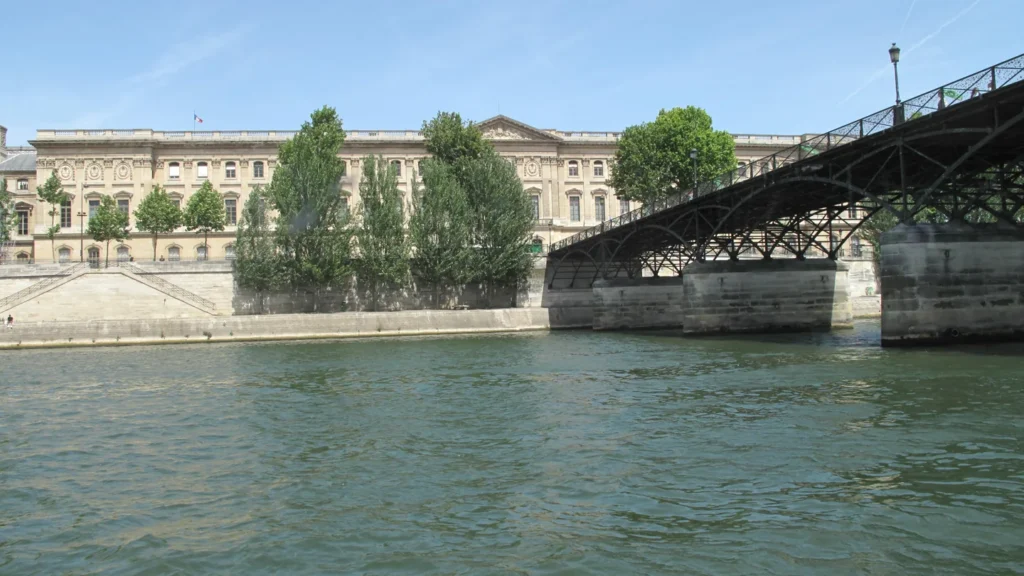
Start around the church and Boulevard Saint-Germain. Walk north toward the Institut de France, cross the pedestrian Pont des Arts and continue toward the Louvre courtyard. The direct walk took 15 minutes to the common planner pin, matching the earliest public transit arrival in this example without a wait or transfer. At night, stay on the Left Bank for dinner near the church or circle back by the river rather than choosing a hotel just for its Métro line. The drawback is that a hotel several blocks west or south will not reproduce the 15-minute sample.
Saint-Paul if you want to come home to Le Marais
Start on Rue Saint-Antoine beside the Métro. You can spend a spare hour under the arcades at Place des Vosges or stop around Rue des Rosiers before returning to the hotel. The sampled Line 1 trip had the earliest Louvre arrival, but the simpler Versailles option took 17 minutes longer than the comparable routes from the other two bases. If Versailles is just one morning of a longer stay, that difference may matter less than enjoying the neighborhood each evening.
Opéra for rail options and the Grands Boulevards
Look near Place de l’Opéra if you want Métro 7 for the Louvre and the option to walk to Saint-Lazare. The Versailles example via RER C matched the Saint-Germain arrival, and Line L gives you a separate rail route. The fastest sampled way to Gare du Nord used a transfer, but a one-line ride plus a short walk was only two minutes behind. Finish a day around Palais Garnier or the boulevards. If a quiet room matters, check where it faces instead of assuming every hotel on or off a main road sounds the same.
4. What to Check Before Booking a Hotel
Put the hotel address into the planner before you pay
Test the actual hotel door to your first timed reservation. Then run the reverse trip at the hour you expect to head back, especially if you are returning from Versailles after dinner. A five-minute walk between the hotel and the station can erase most of the small differences in the Louvre column. With luggage, a no-change journey can be a better choice than a slightly earlier arrival with an interchange and stairs. For step-free routes, use RATP’s accessible itinerary option and check lift availability for the specific stations.
One example of why dates matter: RATP’s works notice says Métro 4 trains pass through Saint-Michel without stopping from September 14 through December 19, 2026. That is not the same as a closure of all of Line 4. The direct route from Saint-Germain-des-Prés to Gare du Nord remained in the sample. Check RATP and Transilien again for your own dates before relying on any one route.
Frequently Asked Questions
Which area works best if Versailles is the main day trip?
Opéra is the strongest pick for a backup route, not because it beat Saint-Germain in this sample. Both reached the forecourt at 9:58 using RER C, but from Opéra you can also walk to Saint-Lazare for a direct Line L train to Versailles Rive Droite.
Where should I stay if I arrive at Gare du Nord with luggage?
Saint-Germain-des-Prés gives you a direct Line 4 route and a short street approach in the sample. Saint-Paul can also be reached on one line with a longer walk from Métro 5. Look up the route in the arrival direction at your actual train arrival time, because these comparisons were run toward Gare du Nord.
Should I move hotels just to make the Versailles trip easier?
Usually not for one day trip. In this test the difference between the simplest routes was 17 minutes, and that applies to one outbound journey. Compare that with packing, check-out and getting to a second hotel. It makes more sense to change bases if several of your other trips also favor the new address.
What Did We Learn Today?
The most useful base is the one that suits the trips you make repeatedly. An easy walk can beat an apparently short ride, and a second rail route can matter more than a few minutes on the first one. Use the hotel’s actual address and test your return journey before you decide.
Sources & Data Notes
Route checks, official entrance maps and photo credit
Route estimates were checked November 27, 2026 for a 9:00 a.m. departure on December 10. Minutes in the comparison come from arrival minus 9:00, not from rounded trip durations on the route cards. Walking-only times are planner estimates. The test excludes hotel walks, queues and the last step from the outdoor pins to the ticketed entrances. None of the nine examples is an on-the-ground trip report.
- RATP journey planner and Line 4 works notice: scheduled comparisons and station closure.
- Louvre entrance map and Château de Versailles access FAQ: the Pyramid and palace Entrance A.
- SNCF Gares & Connexions: Paris Gare du Nord: location of the Dunkerque exit relative to the mainline concourse. See also Eurostar’s station guide.
- Transilien: Line C branch and interchange map, Line L and December RER C works calendar.
- Paris tourist office: walk through Le Marais, Pont des Arts, and Place de l’Opéra.
- Cover: Tangopaso, the Louvre and Pont des Arts from the Seine, May 2011, released into the public domain. Cropped for display.