Historical flag guide
Tanganyika Flag: The Horizontal Stripes Before Tanzania
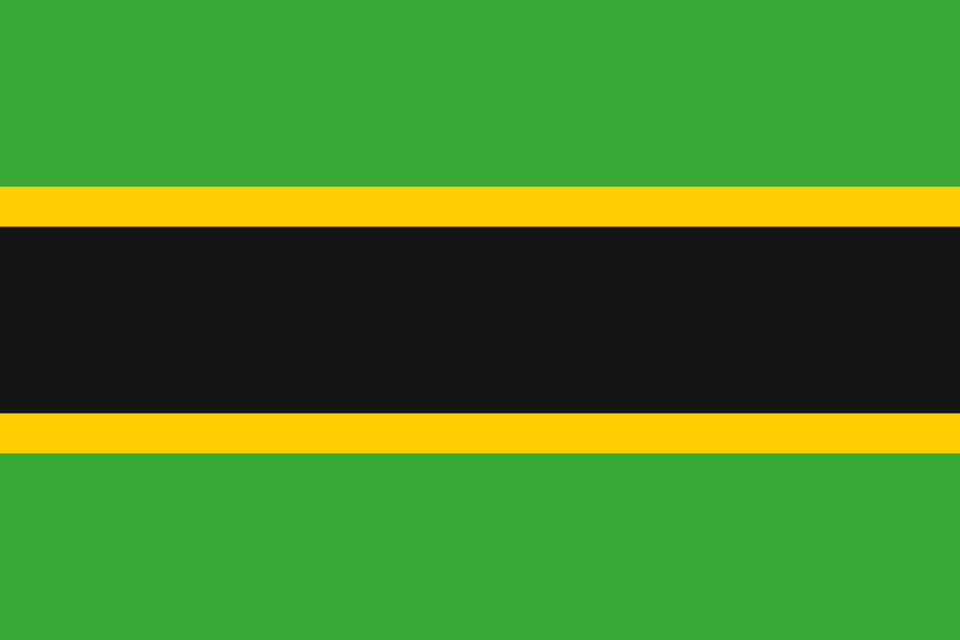
Before Tanzania’s gold-edged stripe ran diagonally, a similar band lay straight across the flag of Tanganyika. The design belonged to the mainland territory that became independent in 1961 and joined Zanzibar in 1964.
How can you tell Tanganyika’s flag from Tanzania’s?
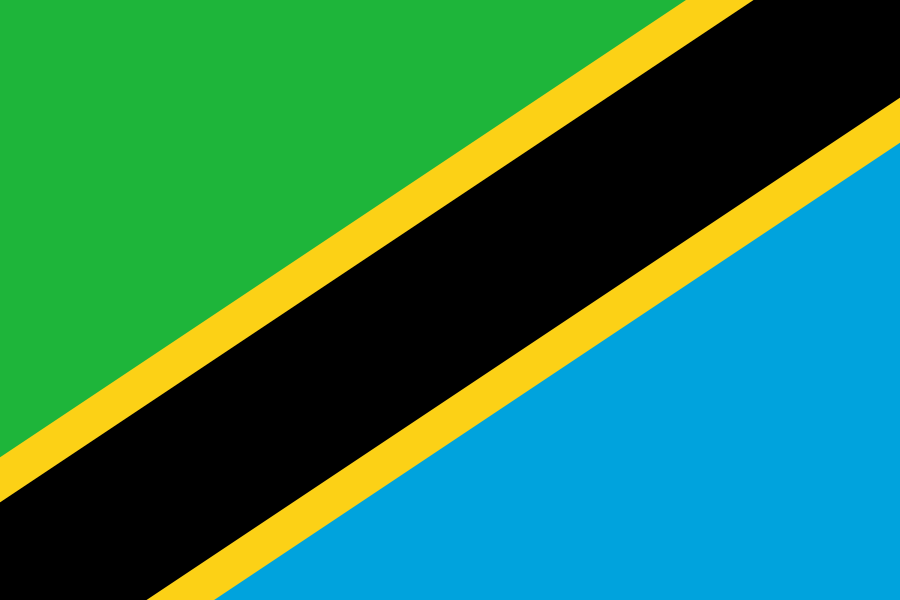
Look at the angle of the black band. On Tanganyika’s flag it runs horizontally between two green fields. Thin golden strips separate the green from the black. Tanzania retained these three colors but tilted the black band and placed blue in the lower part of the flag.
Design and dates
Three broad green, black and green horizontal bands, separated by two thin golden lines.
| Collection | Historical flags |
|---|---|
| Date of this design | 1961, the year of independence |
| Geographic region | Eastern Africa |
| Use covered by this guide | 1961–1964 · national flag |
Colors and symbols
- Green fields
- Green stood for the land. The fields at the top and bottom have the same color.
- Central black stripe
- Black represented the people. Its uninterrupted horizontal direction separates the mainland design from the later union flag.
- Gold edging
- Gold referred to mineral resources. These two fine strips distinguish the national design from the simpler green-black-green pattern of the Tanganyika African National Union.
How the flag developed
The national colors grew out of a familiar political emblem. The Tanganyika African National Union, led by Julius Nyerere, had used green and black. Adding gold edging turned its three broad bands into a design suitable for identification as a separate national flag.
The dates of independence, union and adoption of a new flag answer different questions. Tanganyika gained independence from Britain on 9 December 1961. On 26 April 1964 Tanganyika and Zanzibar became a single sovereign state. The new state initially bore the names of both partners. The United Nations records its later change of name to Tanzania.
For someone dating a photograph, the small details matter. A horizontal green-black-green pattern with no visible yellow may be a party flag, or the fine gold lines may be lost in a low-resolution image. A diagonal black band with a blue triangle points to the flag adopted for the union.
Timeline
1961
The gold-edged design was introduced in the run-up to independence. Tanganyika became independent in December.
26 April 1964
Tanganyika and Zanzibar united. This date marks the political union.
June 1964
A new national flag combined colors from the two partners.
November 1964
The United Nations records the new name, United Republic of Tanzania.
Compare the flags of Tanganyika and Tanzania
Which design introduces a blue field and turns the gold-edged stripe diagonally?
Reveal the flag names and clues
A · Tanganyika
B · Tanzania
The modern Tanzanian flag has blue below the diagonal. Tanganyika had no blue field, and its central band was parallel to the top and bottom edges.
Download the flag
Artwork credit and reuse
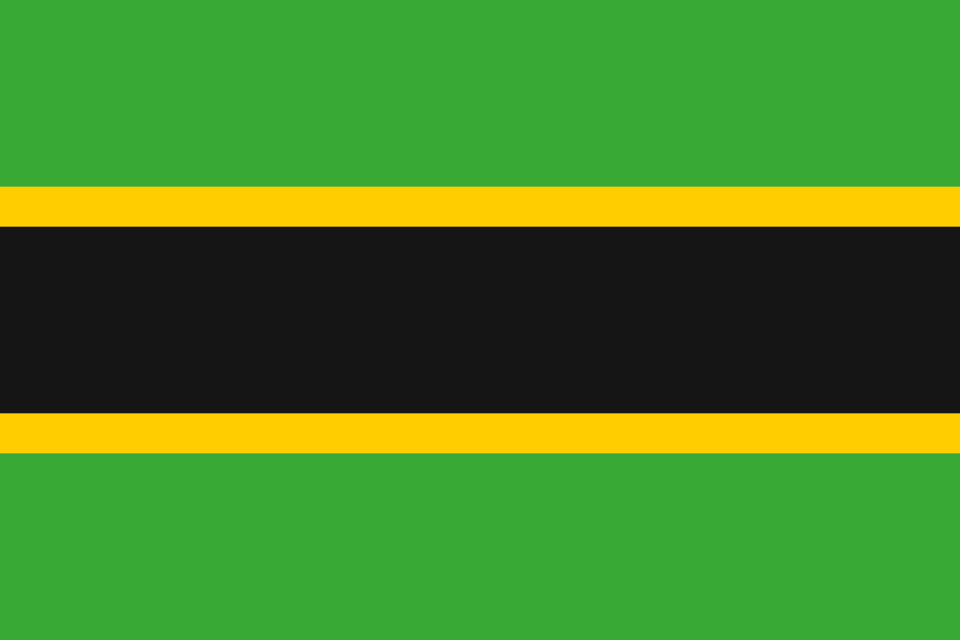
GeographyPin · GPL-2.0-or-later. The PNG is a raster export of the credited SVG.
What Did We Learn Today?
Tanganyika contributes three colors to Tanzania’s flag. The change in the direction of the black band marks the difference between the two designs.
Sources & Data Notes
View references and illustration credits
- Southern African Vexillological Association, Tanganyika flag specification — Supplies the stripe dimensions, color meanings and distinction from the party flag.
- United Nations, notification of union — The governments reported the effective date of the union.
- United Nations, United Republic of Tanzania — Distinguishes the April union from the subsequent name change.
Illustration credit
The drawing follows the five band heights in the Southern African Vexillological Association’s construction sheet. Artwork by GeographyPin, released under GPL-2.0-or-later.