National flag guide
Flag of Spain: Meaning, Symbols and History
Spain’s red-yellow-red design began as a naval ensign chosen under Charles III in 1785.
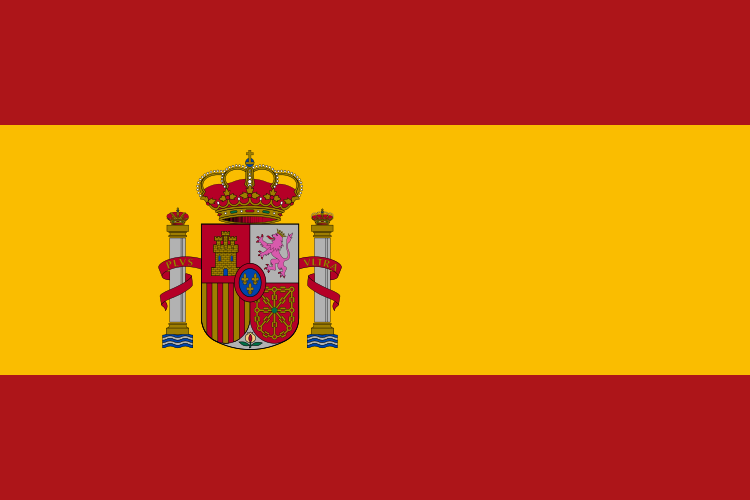
Spain’s flag has red, yellow and red horizontal bands, with the yellow band twice as wide as either red band. The state coat of arms sits toward the hoist. Its shield recalls historic kingdoms, while the crown, Bourbon arms and Pillars of Hercules identify additional elements of the state emblem.
The design and its details
Spain’s flag has red, yellow and red horizontal bands, with the yellow band twice as wide as either red band. The state coat of arms sits toward the hoist. Its shield recalls historic kingdoms, while the crown, Bourbon arms and Pillars of Hercules identify additional elements of the state emblem.
| Flag | Spain |
|---|---|
| Collection | Country flags |
| Adoption or specification | Red-yellow-red design, 1785; present arms, 1981 |
| Browsing region | Europe · Southern Europe |
| Illustrated proportions (height:width) | 2:3 |
What the flag means
The yellow stripe is twice the height of either red stripe. The arms assemble historical kingdoms and dynastic references, including the pillars of Hercules. They are not a simple map or a list of today’s autonomous communities.
| Element | Meaning or historical connection |
|---|---|
| Red-yellow-red | A distinctive color arrangement selected for maritime recognition in the eighteenth century; universal moral meanings are not legally fixed for each band. |
| Castle, lion, bars, chains and pomegranate | The arms recall Castile, León, Aragon, Navarre and Granada. |
| Central fleur-de-lys shield | A dynastic reference to the ruling Bourbon line. |
| Pillars and motto | The Pillars of Hercules and Plus Ultra, meaning Further Beyond, form part of the state arms. |
How the flag developed
Spain’s red-yellow-red design began as a naval ensign chosen under Charles III in 1785. At sea, distinctive colors helped separate Spanish vessels from other European ships whose flags often used large white fields and similar royal arms. The pattern later expanded from maritime and military use into a general national flag.
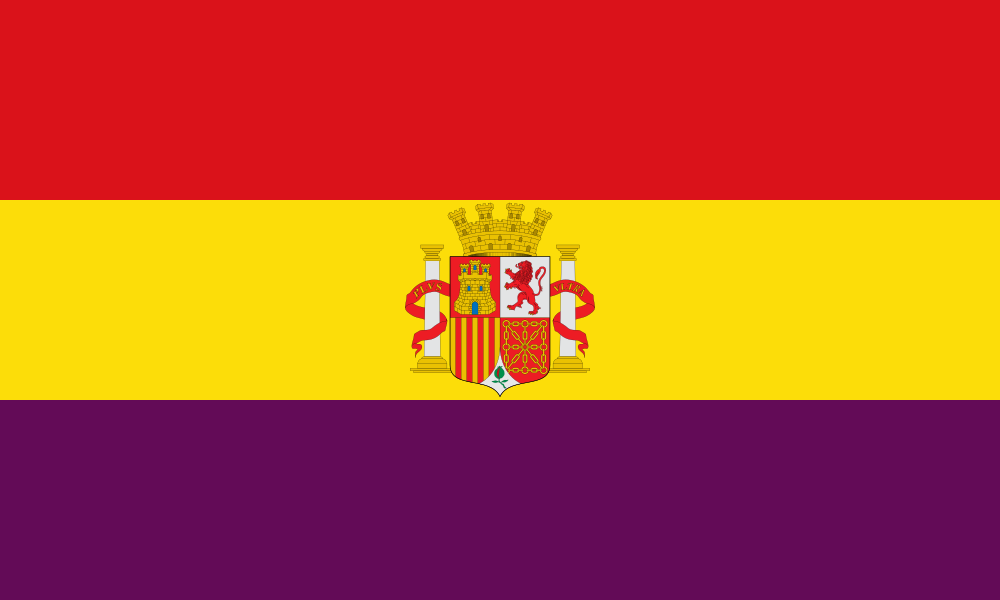
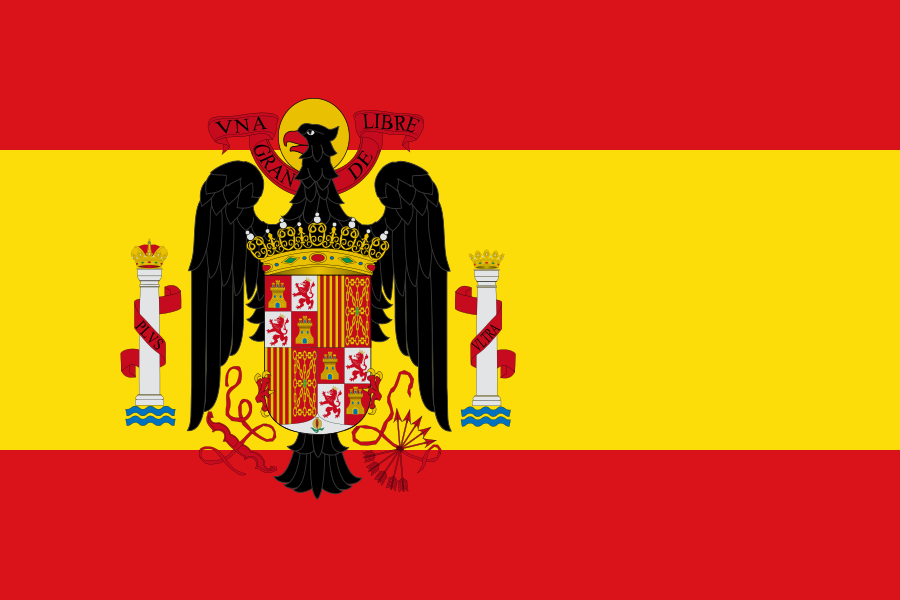
Changes of regime altered the arms and sometimes the stripes themselves. The Second Republic used red, yellow and purple from 1931, while the red-yellow-red arrangement returned during the Civil War and continued under Franco with a different coat of arms. The present constitutional era retained the stripe pattern but introduced the current arms in 1981. A flag’s basic colors can therefore outlast the institutions represented by the emblem placed on them.
The main changes over time
1785 — Naval design
Charles III selected the red-yellow-red ensign.
1931–1939 — Second Republic tricolour
The republic introduced a purple lower band.
1981 — Present coat of arms
The constitutional-era arms replaced the earlier state emblem.
Historical flags in pictures
How to recognise this flag
Look for the wide yellow middle stripe and the arms shifted toward the hoist. A Spanish flag bearing a prominent black eagle is an earlier state version, not the present coat of arms.
Earlier designs and other uses
Plain civil flags can appear without arms. The state arms and historical variants require identification by their particular design and period.
Questions about this flag
When was the flag adopted?
Red-yellow-red design, 1785; present arms, 1981. An adoption date can refer to a design, its restoration or a later legal specification; the timeline above separates those stages.
What should I check before identifying an older example?
Plain civil flags can appear without arms. The state arms and historical variants require identification by their particular design and period.
What Did We Learn Today?
Look for the wide yellow middle stripe and the arms shifted toward the hoist. A Spanish flag bearing a prominent black eagle is an earlier state version, not the present coat of arms. Its adoption and later changes reflect the national history described in the timeline, while older or specialist flags need their own labels.
Sources & Data Notes
This guide distinguishes first use, national adoption, restoration and later construction standards. Traditional or commonly reported interpretations are identified where they differ from a formal specification. It is a dated reference, not a live record of every change in official flag use.
- Government of Spain — State Symbols.
- Flagpedia: Spain — flag artwork and comparison reference.
- Flag history reference and bibliography — chronology and links to underlying sources.
The main illustration preserves the selected flag artwork’s proportions; these are a reproduction guide, not a substitute for a legal construction drawing. Color names group shades for browsing.
Illustration credits
- Flag of Spain 1931 1939.svg — SanchoPanzaXXI; CC BY-SA 4.0.
- Flag of Spain 1945 1977.svg — SanchoPanzaXXI; CC BY-SA 4.0.

