National flag guide
Flag of San Marino: Meaning, Symbols and History
San Marino’s white-and-blue national colors developed around the turn of the nineteenth century.
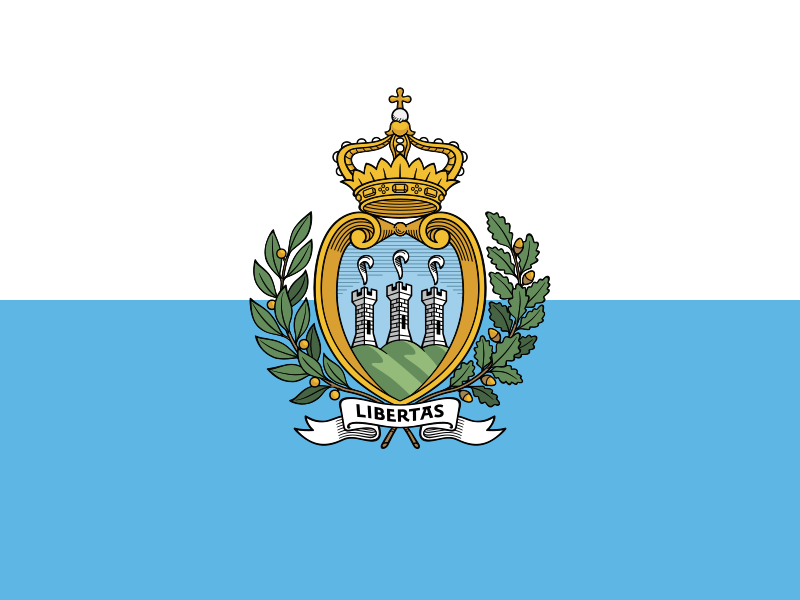
Two equal horizontal bands of white (top) and light blue, with the national coat of arms in the center; the main colors come from the shield on the coat of arms, which features three white towers on mountain peaks on a blue field; a wreath and a crown are around the shield, above a scroll with the word Libertas (Liberty).
The design and its details
Two equal horizontal bands of white (top) and light blue, with the national coat of arms in the center; the main colors come from the shield on the coat of arms, which features three white towers on mountain peaks on a blue field; a wreath and a crown are around the shield, above a scroll with the word Libertas (Liberty).
| Flag | San Marino |
|---|---|
| Collection | Country flags |
| Adoption or specification | Nineteenth-century bicolour; standardised on 22 July 2011 |
| Browsing region | Europe · Southern Europe |
| Illustrated proportions (height:width) | 3:4 |
What the flag means
The three towers are Guaita, Cesta and Montale on Mount Titano. The motto Libertas means liberty. White and blue are commonly associated with peace and freedom.
| Element | Meaning or historical connection |
|---|---|
| White and blue | Commonly associated with peace and liberty. |
| Three towers | Guaita, Cesta and Montale on Mount Titano. |
| Crown and branches | Elements of the republic’s arms, with oak and laurel framing the shield. |
| Libertas motto | Liberty, a central statement of the republic’s identity. |
How the flag developed
San Marino’s white-and-blue national colors developed around the turn of the nineteenth century. The arms have a longer heraldic history, centered on the three towers of Mount Titano and the republic’s tradition of liberty.
An 1862 decree standardised the arms, while legislation in 2011 specified the modern flag and emblem more precisely. These dates describe different stages of standardisation rather than the creation of San Marino itself. The crown above the shield represents sovereignty in the republican heraldic setting and should not be treated as proof that the state is a monarchy.
The main changes over time
Around 1800 — White and blue colors
The modern bicolour tradition developed.
1862 — Arms standardised
The republic specified its heraldic emblem.
2011 — Flag and arms specifications
Modern legislation clarified the national design.
How to recognise this flag
The white band sits above light blue, with the elaborate arms in the center. A small image without the arms loses San Marino’s most useful distinguishing feature.
Earlier designs and other uses
Plain bicolours can be encountered in civil use, but the official national design includes the coat of arms.
Questions about this flag
When was the flag adopted?
Nineteenth-century bicolour; standardised on 22 July 2011. An adoption date can refer to a design, its restoration or a later legal specification; the timeline above separates those stages.
What should I check before identifying an older example?
Plain bicolours can be encountered in civil use, but the official national design includes the coat of arms.
What Did We Learn Today?
The white band sits above light blue, with the elaborate arms in the center. A small image without the arms loses San Marino’s most useful distinguishing feature. Its adoption and later changes reflect the national history described in the timeline, while older or specialist flags need their own labels.
Sources & Data Notes
This guide distinguishes first use, national adoption, restoration and later construction standards. Traditional or commonly reported interpretations are identified where they differ from a formal specification. It is a dated reference, not a live record of every change in official flag use.
- Archived World Factbook country record — background flag description and symbolic interpretations; later changes are explained above.
- Flagpedia: San Marino — flag artwork and comparison reference.
- Flag history reference and bibliography — chronology and links to underlying sources.
The main illustration preserves the selected flag artwork’s proportions; these are a reproduction guide, not a substitute for a legal construction drawing. Color names group shades for browsing.
Current flag artwork is supplied with the original flag collection; the package’s artwork register contains provenance and license details.