Historical flag guide
Ottoman Empire Flag: Meaning and History
The Ottoman Empire used many military, religious, naval and dynastic banners over its long existence.
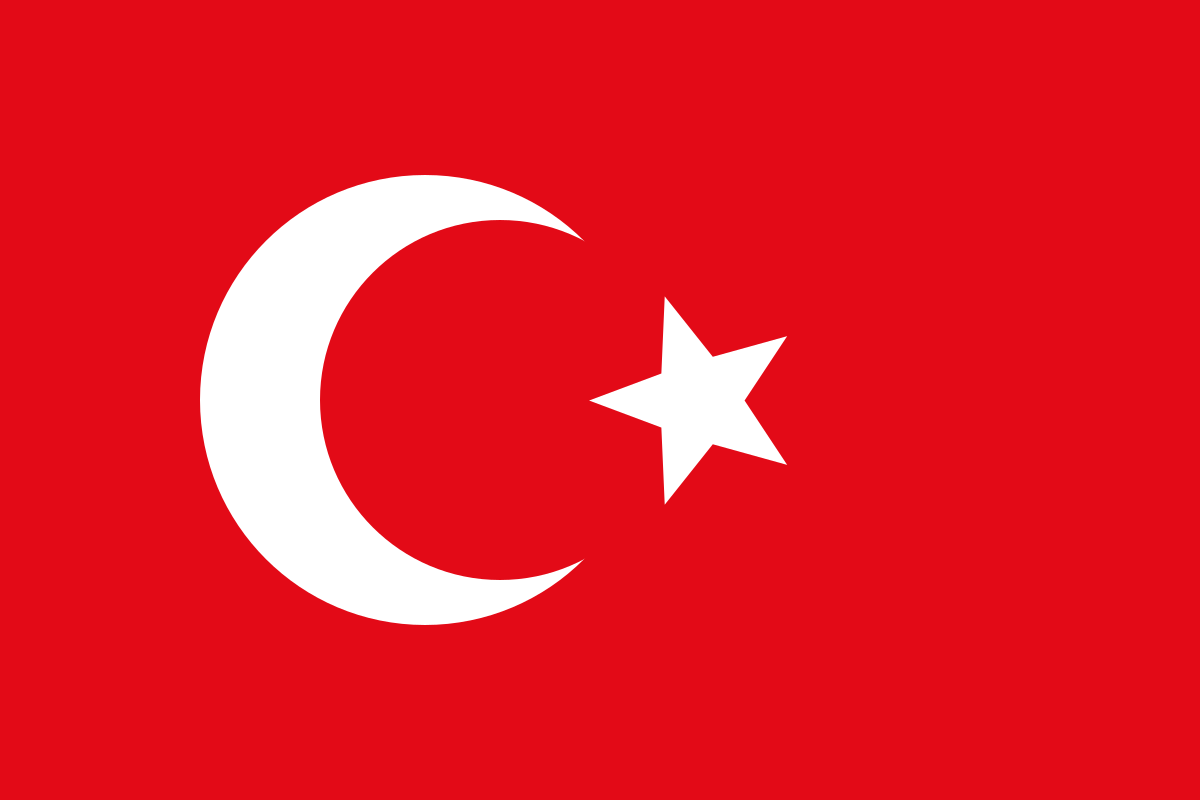
A red field with a white crescent and five-pointed star, representing the late Ottoman national flag. The crescent and star have long histories that extend beyond this empire. Ottoman use helped make the combination widely associated with Islam, but the symbols did not originate as a universal flag for every Muslim community.
The design and its details
A red field with a white crescent and five-pointed star, representing the late Ottoman national flag.
| Flag | Ottoman Empire |
|---|---|
| Collection | Historical flags |
| Adoption or specification | 1844 for the late imperial national design |
| Browsing region | Asia · Former multinational states |
| Illustrated period | 1844–1922 |
What the flag means
The crescent and star have long histories that extend beyond this empire. Ottoman use helped make the combination widely associated with Islam, but the symbols did not originate as a universal flag for every Muslim community.
| Element | Meaning or historical connection |
|---|---|
| Red | An established color in the empire’s late national and maritime flag tradition. |
| White crescent | An emblem used in Ottoman contexts and later widely associated with Islam. |
| Five-pointed star | The nineteenth-century star form of the late imperial national flag. |
| Combined emblem | Influenced numerous later flags, but was not a universal flag of all Muslim peoples or the only Ottoman banner ever used. |
How the flag developed
The Ottoman Empire used many military, religious, naval and dynastic banners over its long existence. It would be misleading to give the familiar red crescent-and-star flag a single unbroken national history reaching back to the empire’s foundation.
The five-pointed-star design became established in 1844 during the nineteenth-century reform period. Earlier Ottoman crescent flags could use different star shapes or arrangements. The late imperial flag is the version illustrated here.
The sultanate was abolished in 1922, and the Republic of Turkey was proclaimed in 1923. The red crescent-and-star design continued into the republic, with later Turkish legislation specifying its geometry. That continuity explains the close resemblance without making the Ottoman Empire and present Turkey the same political state.
The main changes over time
Before 1844 — Multiple imperial banners
Different branches and periods used different flags.
1844 — Five-pointed-star design
The familiar late national arrangement became established.
1922–1923 — Empire to republic
The sultanate ended and the Turkish republic retained the basic design.
How to recognise this flag
The late Ottoman design closely resembles the modern Turkish flag. Historical context and construction details matter more than a quick thumbnail comparison.
Compare the relevant designs in these guides:
Earlier designs and other uses
Royal standards and earlier naval flags are different Ottoman symbols, not errors in the illustrated late national flag.
Questions about this flag
Which period does this historical flag represent?
1844–1922. The sultanate was abolished in 1922, and the Republic of Turkey was proclaimed in 1923. The red crescent-and-star design continued into the republic, with later Turkish legislation specifying its geometry. That continuity explains the close resemblance without making the Ottoman Empire and present Turkey the same political state.
What should I check before identifying an older example?
Royal standards and earlier naval flags are different Ottoman symbols, not errors in the illustrated late national flag.
What Did We Learn Today?
The late Ottoman design closely resembles the modern Turkish flag. Historical context and construction details matter more than a quick thumbnail comparison. The historical label identifies a particular state or version; related modern flags have their own national histories.
Sources & Data Notes
This guide distinguishes first use, national adoption, restoration and later construction standards. Traditional or commonly reported interpretations are identified where they differ from a formal specification. It is a dated reference, not a live record of every change in official flag use.
Illustration credits
- Flag of the Ottoman Empire.svg — User:Orwellianist; Public domain.
