National flag guide
Flag of North Korea: Meaning, Symbols and History
North Korea adopted its red-star flag during the establishment of the Democratic People’s Republic of Korea in 1948.
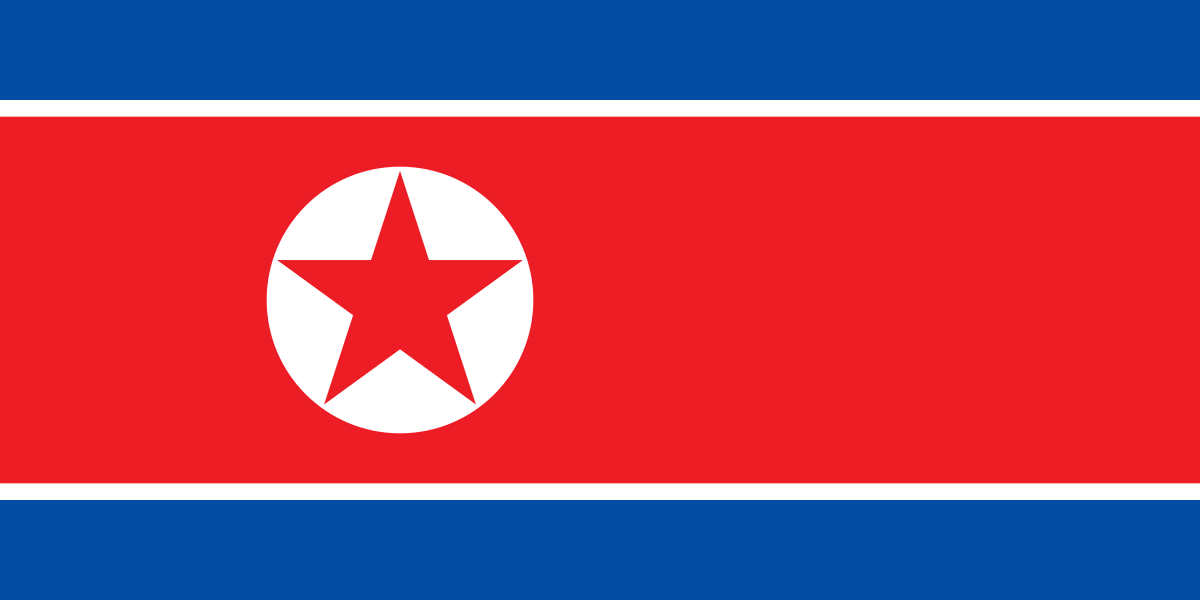
Three horizontal bands of blue (top), red (triple-width), and blue; the red band is edged in white; on the left side of the red band is a white disk with a red five-pointed star. The star and colors belong to North Korea’s official revolutionary symbolism.
The design and its details
Three horizontal bands of blue (top), red (triple-width), and blue; the red band is edged in white; on the left side of the red band is a white disk with a red five-pointed star.
| Flag | North Korea |
|---|---|
| Collection | Country flags |
| Adoption or specification | 1948 design; revised 20:33 proportions published in 2026 |
| Browsing region | Asia · Eastern Asia |
| Illustrated proportions (height:width) | 20:33 |
What the flag means
The star and colors belong to North Korea’s official revolutionary symbolism. The November 2026 publication of the revised constitution changed the prescribed proportions to 20:33; it did not replace the star-and-stripe design.
| Element | Meaning or historical connection |
|---|---|
| Red central band | Revolutionary traditions and the official political identity of the state. |
| White bands | Purity, strength and dignity in the official explanation. |
| Blue outer bands | Sovereignty, peace and friendship. |
| Red star | Socialist and revolutionary symbolism. |
| Proportions | The 2026 constitutional wording prescribes 20:33. A change in geometry does not assign a new meaning to the colors or star. |
How the flag developed
North Korea adopted its red-star flag during the establishment of the Democratic People’s Republic of Korea in 1948. It replaced the Taegeukgi that had been used in Korea before the separate northern state was formed.
The design combined a broad red band, narrow white separators and blue outer bands, with a red star in a white disc toward the hoist. Accounts of the individual designer differ between official and other historical sources, so a guide should not invent an uncontested sole author. Later specifications concern the established design rather than a new independence event.
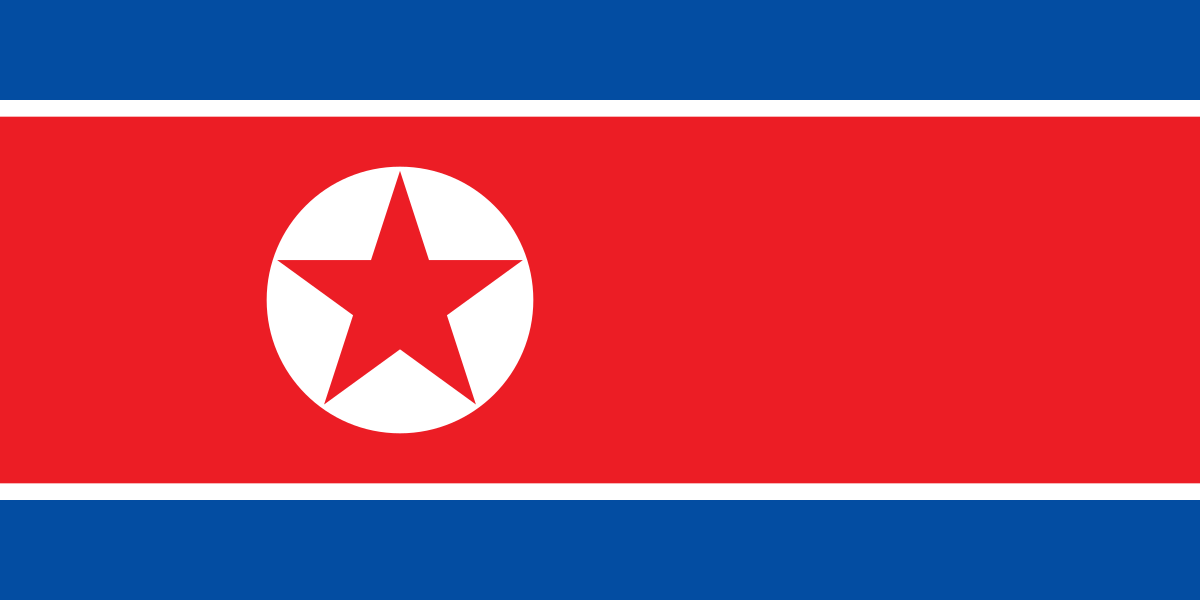
In November 2026, the newly published constitution specified a height-to-width ratio of 1:1.65, replacing the earlier 1:2 rule. The red-star and stripe design remained, but the flag became shorter relative to its height. The current illustration uses the 2026 proportions; the older 1:2 version is shown separately below.
The main changes over time
Before 1948 — Earlier Korean flag tradition
The Taegeukgi preceded the separate northern state.
1948 — DPRK national flag
The red-star design was adopted with the first constitution.
2026 — Proportions revised
The published constitution changed the ratio from 1:2 to 20:33.
Historical flags in pictures
How to recognise this flag
A red star sits inside a white disc toward the hoist of the broad red stripe. The blue outer bands and narrow white separators are essential parts of the design.
Earlier designs and other uses
Party, military and leadership flags have different devices. Exact construction should be checked against the applicable specification when producing official cloth flags.
Questions about this flag
When was the flag adopted?
1948 design; revised 20:33 proportions published in 2026. An adoption date can refer to a design, its restoration or a later legal specification; the timeline above separates those stages.
What should I check before identifying an older example?
Party, military and leadership flags have different devices. Exact construction should be checked against the applicable specification when producing official cloth flags.
What Did We Learn Today?
A red star sits inside a white disc toward the hoist of the broad red stripe. The blue outer bands and narrow white separators are essential parts of the design. Its adoption and later changes reflect the national history described in the timeline, while older or specialist flags need their own labels.
Sources & Data Notes
This guide distinguishes first use, national adoption, restoration and later construction standards. Traditional or commonly reported interpretations are identified where they differ from a formal specification. It is a dated reference, not a live record of every change in official flag use.
- Yonhap, 13 November 2026: revised constitutional flag proportions.
- Archived World Factbook country record — background flag description and symbolic interpretations; later changes are explained above.
- Flagpedia: North Korea — flag artwork and comparison reference.
- Flag history reference and bibliography — chronology and links to underlying sources.
The main illustration preserves the selected flag artwork’s proportions; these are a reproduction guide, not a substitute for a legal construction drawing. Color names group shades for browsing.
Illustration credits
- Flag of North Korea (Naenara Oct 2026).svg — Original: Government of North Korea Vector: Victor Bing; Public domain.
- kp-previous.svg — Flagpedia flag artwork collection; Public domain / original collection provenance.
