National flag guide
Flag of Cabo Verde: Meaning, Symbols and History
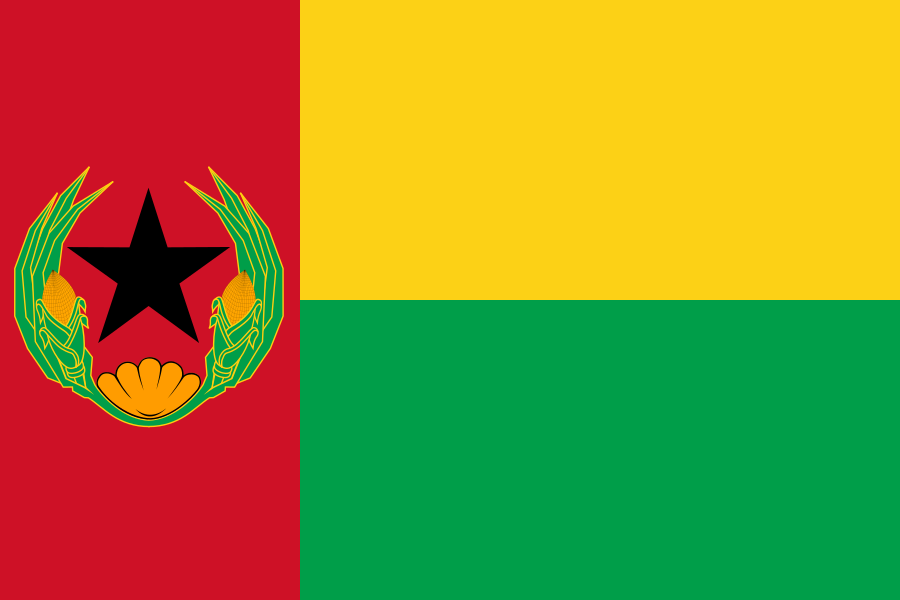
Cabo Verde’s independence flag in 1975 resembled Guinea-Bissau’s, reflecting their shared liberation movement and an earlier ambition of political union.
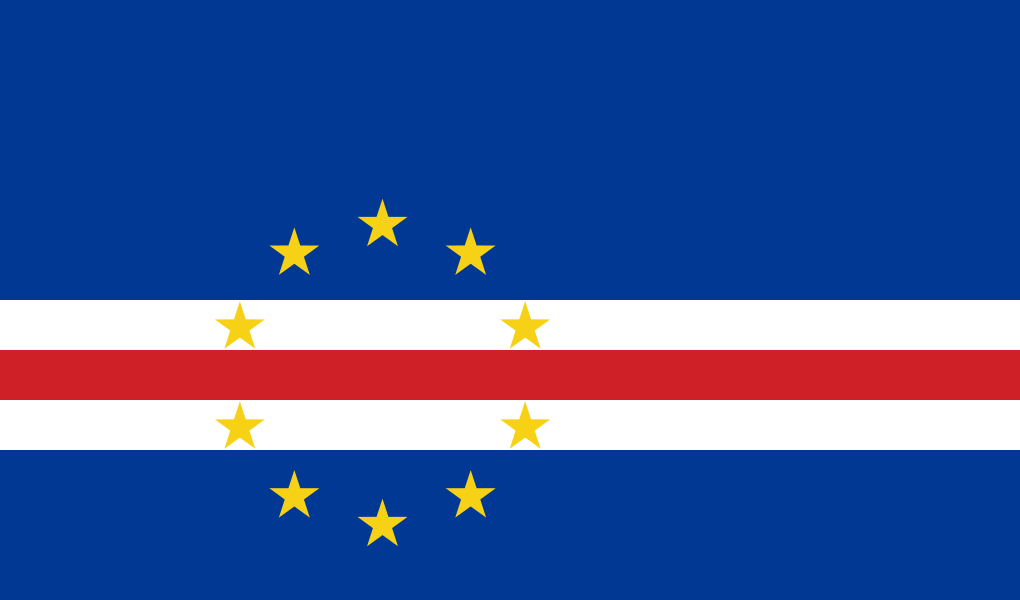
Five unequal horizontal bands; the top band of blue is half the height of the flag; under it are three narrow bands of white, red, and white, and a bottom stripe of blue; a circle of 10 five-pointed yellow stars is centered on the red stripe and sits toward the left side of the flag.
The design and its details
Five unequal horizontal bands; the top band of blue is half the height of the flag; under it are three narrow bands of white, red, and white, and a bottom stripe of blue; a circle of 10 five-pointed yellow stars is centered on the red stripe and sits toward the left side of the flag.
| Flag | Cabo Verde |
|---|---|
| Collection | Country flags |
| Adoption or specification | 25 September 1992 |
| Browsing region | Africa · Western Africa |
| Illustrated proportions (height:width) | 10:17 |
What the flag means
The ten stars represent the ten principal islands, including uninhabited Santa Luzia. They do not mean ten equally populated administrative districts.
| Element | Meaning or historical connection |
|---|---|
| Blue | The Atlantic setting, sea and sky. |
| White stripes | Peace in the nation’s development. |
| Red stripe | Work and effort. |
| Ten gold stars | The ten principal islands, brought together in a circular arrangement expressing unity. |
How the flag developed
Cabo Verde’s independence flag in 1975 resembled Guinea-Bissau’s, reflecting their shared liberation movement and an earlier ambition of political union. It used Pan-African colors with a black star and a wreath-like device.
The blue flag adopted in 1992 introduced a different national emphasis after the move to multiparty politics. Its ring of ten stars refers to the archipelago, while blue places the Atlantic setting at the center of the design. The new flag therefore represents a change from a liberation-movement color scheme to a distinctive island-state identity.
The main changes over time
1975 — Independence flag
A Pan-African design linked Cabo Verde with Guinea-Bissau.
1992 — Atlantic blue design
The present flag replaced the independence-era arrangement.
Historical flags in pictures
How to recognise this flag
Ten yellow stars form an offset circle across white-red-white stripes on a predominantly blue field.
Earlier designs and other uses
The 1975–1992 flag is historical and should not be used as the current national symbol.
Questions about this flag
When was the flag adopted?
25 September 1992. An adoption date can refer to a design, its restoration or a later legal specification; the timeline above separates those stages.
What should I check before identifying an older example?
The 1975–1992 flag is historical and should not be used as the current national symbol.
What Did We Learn Today?
Ten yellow stars form an offset circle across white-red-white stripes on a predominantly blue field. Its adoption and later changes reflect the national history described in the timeline, while older or specialist flags need their own labels.
Sources & Data Notes
This guide distinguishes first use, national adoption, restoration and later construction standards. Traditional or commonly reported interpretations are identified where they differ from a formal specification. It is a dated reference, not a live record of every change in official flag use.
- Archived World Factbook country record — background flag description and symbolic interpretations; later changes are explained above.
- Flagpedia: Cabo Verde — flag artwork and comparison reference.
- Flag history reference and bibliography — chronology and links to underlying sources.
The main illustration preserves the selected flag artwork’s proportions; these are a reproduction guide, not a substitute for a legal construction drawing. Color names group shades for browsing.
Illustration credits
- Flag of Cape Verde (1975–1992).svg — Editor at Large, Waldir; Public domain.
