Flag Explorer
Benin’s Flag and the Return of the Green, Yellow and Red
The present flag was first adopted when the country was still called Dahomey, before independence from France in 1960.
Why did Benin return to its old flag?
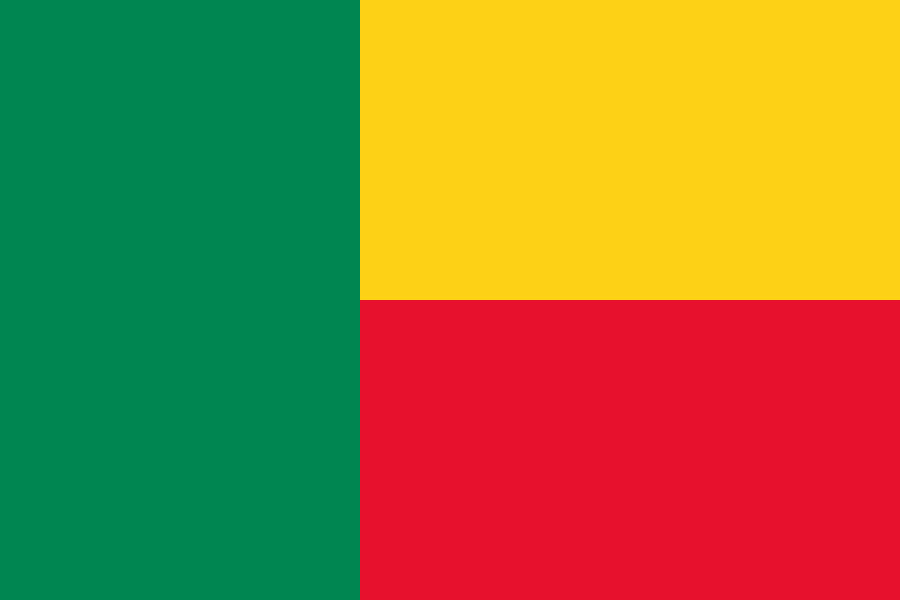
Benin restored its independence-era flag in 1990 as the country moved away from its Marxist-Leninist political system. The earlier national flag had a green band along the pole and yellow above red at the fly. The People’s Republic used a red star on a green field.
The design and its details
Two equal horizontal bands of yellow (top) and red (bottom) to the right, with a vertical green band on the left side.
| Collection | Country flags |
|---|---|
| Adoption or design date | 16 November 1959; restored on 1 August 1990 |
| Geographic region | Africa · Western Africa |
| Illustrated proportions (height to width) | 2:3 |
What the flag means
Green, yellow and red are commonly associated with hope, wealth and courage. Pan-African colors connect countries symbolically, but the unusual layout identifies Benin specifically.
| Element | Meaning or historical connection |
|---|---|
| Green | Hope and renewal. |
| Yellow | National wealth and prosperity. |
| Red | Courage and the sacrifices of the people. |
| Pan-African palette | Connects the national design with a wider independence-era African flag tradition. |
Compare the flags of Benin and Guinea-Bissau
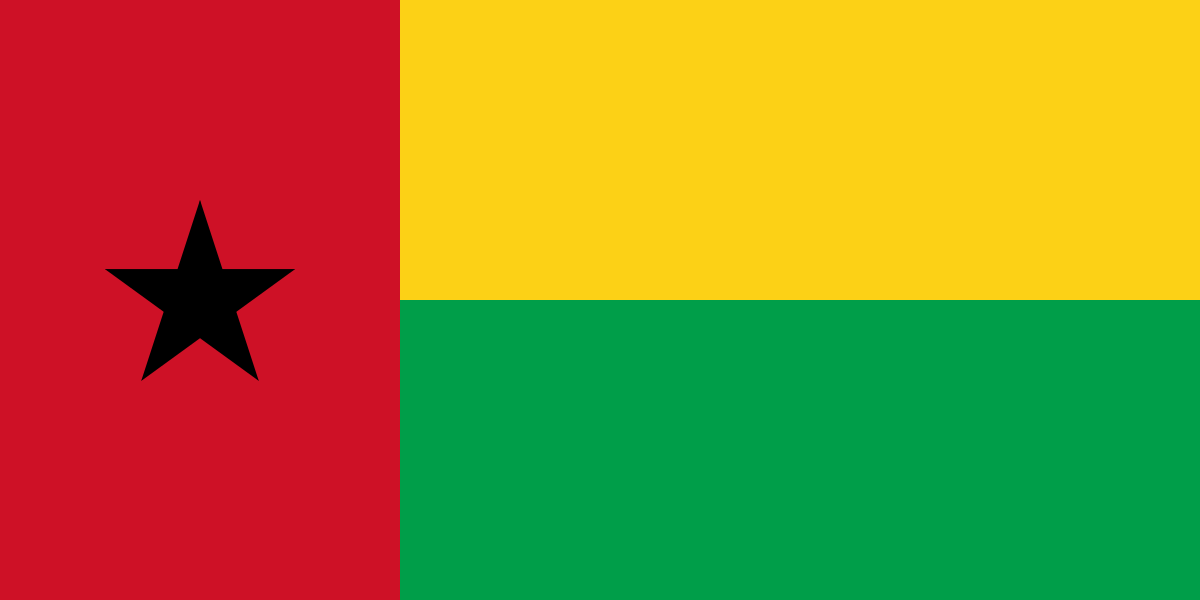
Both designs have a panel beside the pole. Which one contains a star? In both drawings, the flagpole side is on the left.
Reveal the flag names and clues
A · Guinea-Bissau — A black star sits in the red panel. The bands beyond it run yellow above green.
B · Benin — The green panel is plain. The two bands beyond it run yellow above red.
How the flag developed
Its green, yellow and red belong to the Pan-African color tradition.
The socialist government renamed the country Benin in 1975 and replaced the tricolour with a green flag bearing a red star. The original design returned in 1990 during the transition to multiparty politics. The modern flag therefore predates the country’s present name and has a clear interruption in its national use.
The main changes over time
1959 — Dahomey flag
The present layout was adopted before independence.
1975–1990 — People’s Republic
A green flag with a red star replaced it.
1990 — Tricolour restored
The earlier national design returned.
Historical flags in pictures

Earlier designs and other uses
The green flag with a red star represents the People’s Republic period, not present-day Benin.
Download the flag
Artwork credit and reuse
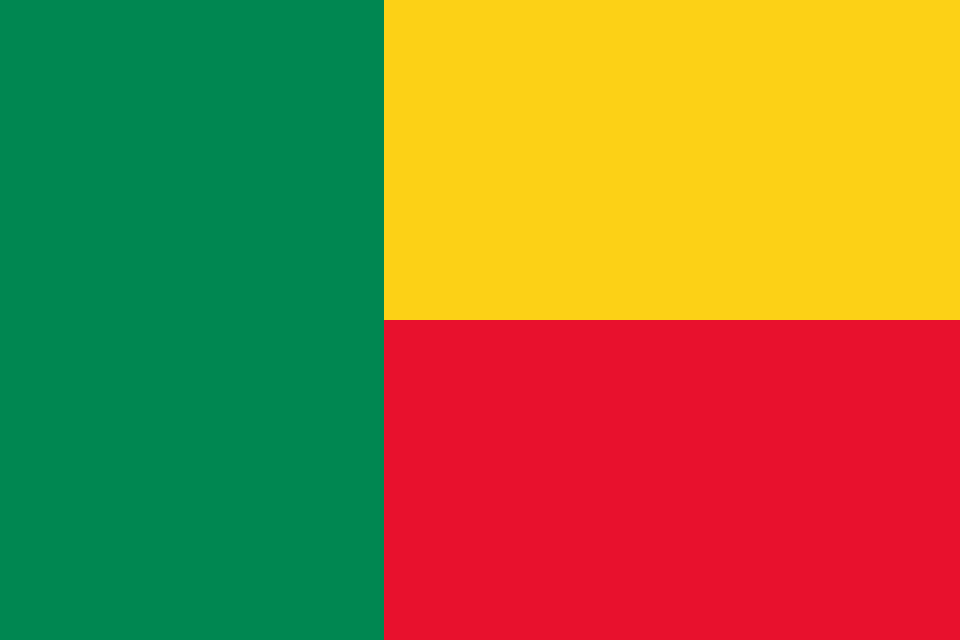
Flagpedia vector collection · Public domain. The PNG is a raster export of the credited SVG.
What Did We Learn Today?
A vertical green band is at the hoist; the rest is yellow over red. Guinea-Bissau instead has a red hoist band containing a black star.
Sources & Data Notes
View references and illustration credits
The dates distinguish adoption of the flag from later revisions to its artwork. The comparison uses the two illustrations at the same height, with the hoist on the left.
- Benin 1990 Constitution, Article 1 — The English text archived by the Constitute Project gives the green panel two fifths of the flag’s length and places yellow above red on the fly.
- Archived World Factbook country record — background flag description and symbolic interpretations; later changes are explained above.
- Flagpedia: Benin — flag artwork and comparison reference.
- Flag history reference and bibliography — chronology and links to underlying sources.
Illustration credits
- Flag of Benin (1975-1990).svg; Public domain.
