Azerbaijan uses the Azerbaijani manat, identified by the currency code AZN. For a trip, the useful questions are how much local cash your next stop needs, which conversion you are accepting and what you will actually receive after charges.
Paying in Azerbaijani manat
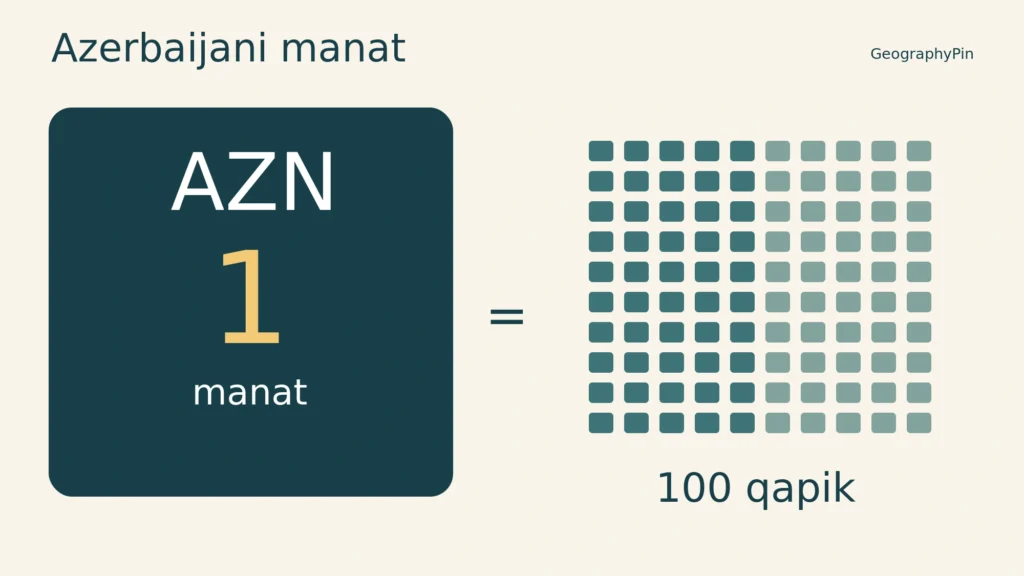
Azerbaijan’s currency is the manat (AZN), divided into 100 qapik. Cards are widely accepted in cities and tourist areas, but keep local cash for rural or cash-only stops. Compare the final amount after fees when exchanging or withdrawing money; an official exchange rate is a reference, not a guaranteed retail quote.
Payment and customs information checked: November 18, 2026. The exchange calculation below is a dated reference example, not a live quote.
How to use this article: Check the notes and coins, understand the terminal’s currency choice, or jump to the AZN-to-PKR example.
1. Recognize the manat and its denominations
The regular notes and coins
The Central Bank’s currency catalogue lists seven regular banknote denominations and six coin denominations. Qapik is also rendered as “gapik” in English-language official material.
| Type | Values | Unit |
|---|---|---|
| Banknotes | 1, 5, 10, 20, 50, 100, 200 | Manat (AZN) |
| Coins | 1, 3, 5, 10, 20, 50 | Qapik; 100 qapik = 1 manat |
Keep some smaller notes and coins rather than relying entirely on the largest notes an ATM gives you. Ask for smaller denominations when exchanging money if that will make your planned purchases easier. The table covers the regular series, not every commemorative issue.
A different design does not necessarily mean a note is obsolete. The Central Bank’s April 15, 2026 announcement scheduled an upgraded 100-manat note for July 15 and explicitly said the upgraded and existing designs would both remain legal tender indefinitely.
That is different from the old AZM currency, which the Central Bank lists as withdrawn from circulation. Do not confuse an older design of a current note with money from the previous currency system.
2. Plan cash around the next part of your trip
The Azerbaijan Tourism Board’s payment guidance says cards are widely accepted in urban shops, restaurants and popular tourist areas, while cash is often preferred in rural areas. It also identifies Visa- and Mastercard-accepting ATMs in major towns and cities. That is useful planning guidance, not a promise that a particular card or terminal will work.
Before leaving your urban base, list the next payments that cannot comfortably wait: onward transport, accommodation balances, meals and any activity already arranged. Ask those providers whether they accept your payment method. Carry enough AZN for the cash-only portion plus a reserve, rather than choosing an arbitrary daily cash allowance.
Keep a second way to pay separate from your main wallet. Check your card’s overseas settings, withdrawal limits and contact arrangements before departure, and do not make the only available payment method depend on a single phone or card.
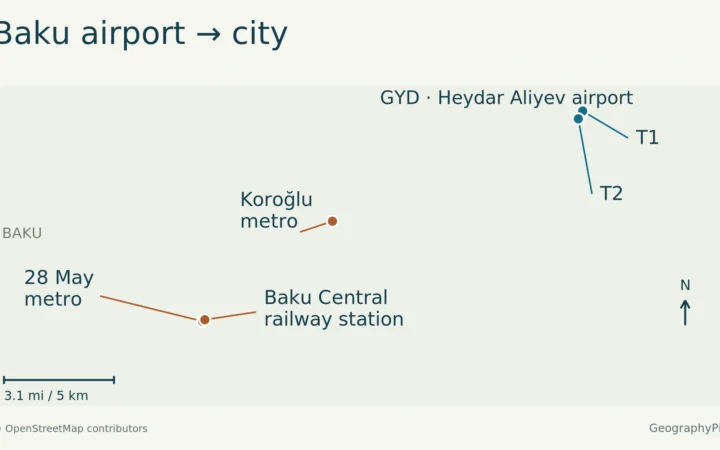
The tourism authority lists exchange services at the airport, banks, licensed exchange offices and some shopping malls. Compare the amount offered for your actual transaction, not just a prominent rate on a board.
If you hand over foreign cash, the exchange business is buying that currency from you. If you use manat to obtain foreign cash, it is selling that currency to you. Ask, “How many manat will I receive after all charges?” and keep the receipt. A favorable-looking rate is less useful than a clear final amount.
3. Read the ATM or card terminal before accepting
AZN or your home currency?
A card terminal or ATM may offer to bill you in your home currency. Visa calls this dynamic currency conversion, or DCC: the offer includes its own exchange rate and possible markup or fees. Visa says the display should show both currency amounts, the exchange rate and additional charges, and leave you a genuine choice.
Choosing AZN declines that offered home-currency conversion. It does not make the transaction fee-free: your card’s own conversion and charges can still apply. Visa advises declining DCC if the required details are missing or you are being pressured to accept it. Read the amount and currency before confirming, not only the button’s wording.
Visa’s foreign-transaction guidance also distinguishes ATM charges from charges imposed by your own financial institution. Check both. A machine’s withdrawal ceiling and your card’s limit are separate constraints, and neither should be assumed from another traveler’s experience.
There is no single withdrawal size that is best for every trip. Several small withdrawals may repeat charges; one large withdrawal means carrying more cash. Compare the displayed charge with your remaining cash needs and your own bank’s tariff before proceeding.
4. Convert AZN to PKR without confusing the units
A dated Pakistani-rupee calculation
For November 18, 2026, the Central Bank rate table lists 100 Pakistani rupees (PKR) = AZN0.6132. The unit is 100 rupees, not one. The following is a worked reference example, not a live converter or a cash-exchange offer.
- AZN to PKR: 100 ÷ 0.6132 ≈ 163.08 PKR per AZN.
- 100 manat: 100 × 100 ÷ 0.6132 ≈ 16,307.89 PKR.
- 10,000 PKR: 10,000 ÷ 100 × 0.6132 = AZN61.32.
For a U.S.-dollar comparison, the Central Bank’s same-date display gives US$1 = AZN1.7000, so US$100 corresponds to AZN170 at that reference rate.
A retail quote can differ because of its buy/sell rate and charges. The presence of PKR in an official table does not establish that a local exchange desk accepts Pakistani-rupee banknotes. Ask the provider which currencies it handles before relying on that cash for your arrival.
When checking a new rate, write down four things together: the date, currency code, number of foreign units and manat value. Then apply the same calculation. Keeping the units visible prevents a much larger mistake than rounding the last decimal place.
5. Keep customs rules separate from exchange rates
The State Customs Committee’s foreign-currency rules distinguish bringing cash in from taking it out. Foreign currency can be imported without a stated amount ceiling, but customs procedures still apply. This is not permission to ignore a declaration requirement.
For exports, the authority describes oral declaration up to US$10,000 equivalent and written declaration plus evidence of prior cash import for amounts from US$10,000 to US$50,000 equivalent. Its wording overlaps at exactly US$10,000. Confirm the applicable procedure before traveling with a substantial amount, especially at that boundary, and retain the relevant customs documents.
Manat and commemorative coins have separate traveler rules; do not apply the foreign-currency threshold to everything in your luggage. Ask Customs about the exact currency, amount and direction of travel rather than relying on a general “under ten thousand” rule.
Use the Azerbaijan travel guide to place your cash stops within the wider itinerary. The practical aim is a workable mix of payment methods, enough local cash for the next leg and a clear understanding of each conversion you accept.
What Did We Learn Today?
AZN identifies the Azerbaijani manat; payment planning begins with the needs of your next stop. Keep useful small cash, read conversion choices before accepting them and compare the final amount after charges. A dated reference calculation helps you understand a quote, but it neither guarantees a retail rate nor replaces customs checks.
Sources & Data Notes
View currency and payment sources
Sources checked November 18, 2026. Calculations use the Central Bank’s dated reference values and are rounded to two decimal places where needed. They are not live rates or verified retail offers. Card acceptance, charges and individual customs requirements should be checked with the relevant provider or authority.
- Central Bank: currency in circulation
- Central Bank: upgraded 100-manat note announcement
- Central Bank: withdrawn currency
- Central Bank: official rate table, including PKR
- Central Bank: dated USD rate display
- Azerbaijan Tourism Board: currency and payments
- Visa: dynamic currency conversion
- Visa: foreign transactions and ATM charges
- State Customs Committee: foreign-currency control
- State Customs Committee: traveler information
Currency graphic: original GeographyPin illustration; the 100 abstract units show the manat subdivision, not replicas of coins or banknotes.