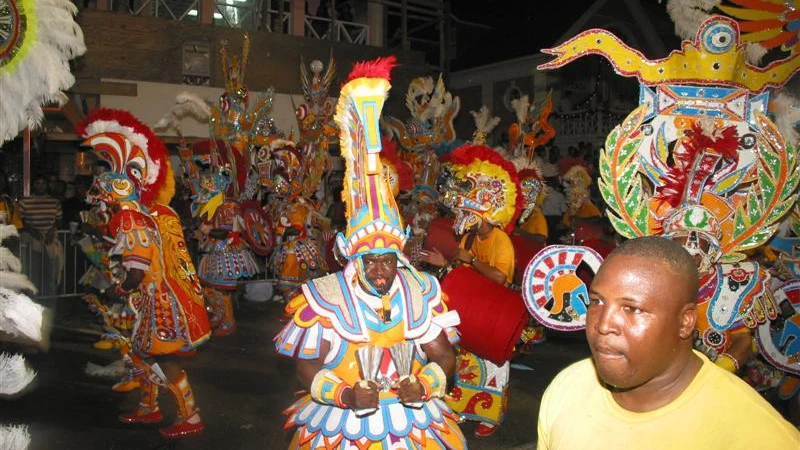
At a Junkanoo parade, you may hear a group coming down Bay Street long before you can see the person inside its biggest costume. Once it reaches you, look for the hands shaking the bells, the drummer keeping the pulse and the small costume details that disappear into a bright shape from a distance.
Junkanoo is the national cultural festival of The Bahamas. Organized groups parade in handmade costumes to drums, cowbells and horns. The biggest holiday performances take place on Bay Street in downtown Nassau around Boxing Day and New Year’s Day. The costumes, dance and music give each group a way to tell its own story.
How to use this article: See how a costume takes shape, spot the Tree of Life details, or compare the drum and cowbell sounds.
1. What Happens When a Group Rushes Down Bay Street
Participants call performing in the procession rushing. It means more than walking along the route: dancers move to the music, players carry the rhythm with them, and costumes give a theme a shape the crowd can see. As a new group approaches, try following the beat first. Then look for repeating colors, forms or characters across its costumes.
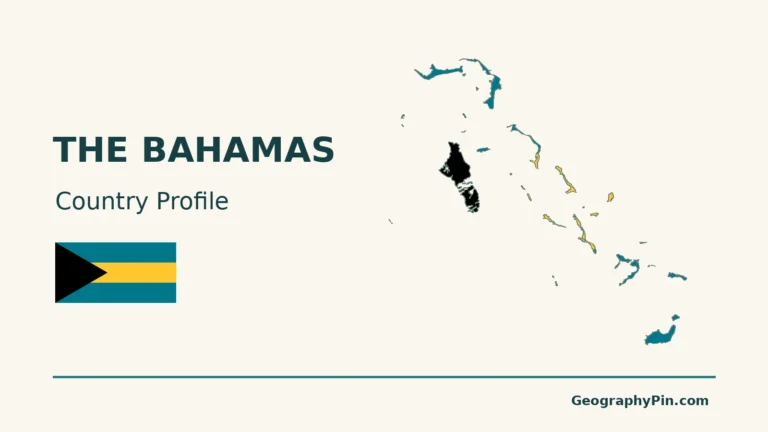
The main holiday spectacle is downtown in Nassau, the capital on New Providence. The Bahamas country profile shows where New Providence sits in the archipelago. Nassau’s parades are the largest, but the tradition is not exclusive to the capital.
2. How the Valley Boys Turn a Sketch Into a Costume
At Stephen Bain’s workbench
In a Bahamas Ministry of Tourism account, Stephen “Eggy Boom” Bain of the Valley Boys helped a writer prepare to rush in the summer festival. He planned the pieces from headpiece to skirt, cut the cardboard and creased it with a narrow piece of wood. Wire held the form in shape before the surface was decorated. In Junkanoo, the finishing work is often called pasting, for the colored paper applied to the prepared surface.
The Tree of Life costume in the street
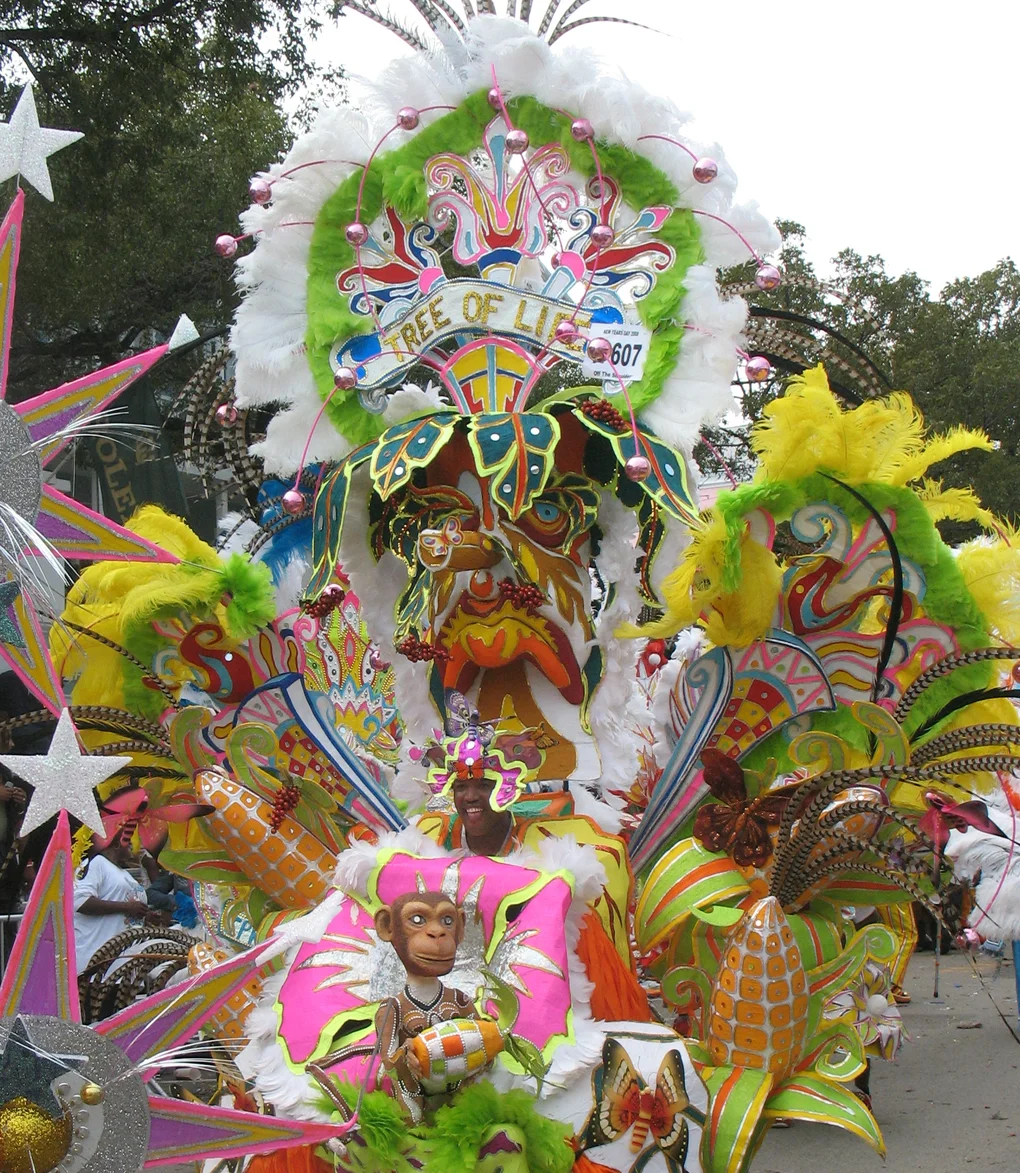
Look at the scale: the performer’s face is below the large feathered panel. The small monkey figure is part of the foreground decoration, not a second performer. This is a different costume from the one in Bain’s summer workshop, but it shows how separate shapes read as one design on the street.
3. How to Pick Out the Drums and Cowbells
Listen for a low beat and a metal ring
Start with the low pulse of a large skin-headed drum, then pick out the brighter metal notes of the cowbells. Horns can carry a tune over both. The museum also identifies the conch shell among the instruments heard in Junkanoo; a trumpeting note does not always come from brass.
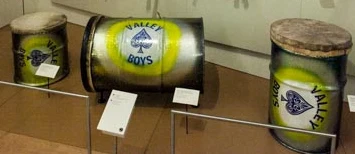
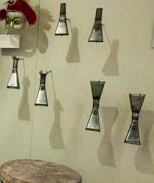
The two photos show a museum display, not a performing group. For a live example of the sound and the craft behind it, watch Bahamian master drum maker John Chipman in the Smithsonian Folklife recording.
4. Why Nassau Has Two Holiday Parades
UNESCO’s account traces Junkanoo to celebrations by enslaved Africans in The Bahamas around the Christmas holidays. The exact origin of the festival’s name is uncertain. The tradition was added to UNESCO’s Representative List of the Intangible Cultural Heritage of Humanity in 2023.
In Nassau, Boxing Day and New Year’s Day now name two separate holiday parades. Boxing Day is December 26, but the parade’s name is not a reliable start time: it can begin the previous evening. For a specific trip, check the official Junkanoo event information and the ALIV Events listings rather than using last season’s timetable.
Frequently Asked Questions
Is every Junkanoo costume as big as the Tree of Life?
No. The Bahamas Museum of Junkanoo distinguishes towering lead costumes from individual costumes. The parade also includes people whose main role is to drum, play other instruments or dance with the group.
Can visitors see Junkanoo outside the winter holidays?
Yes. The Bahamas Ministry of Tourism also identifies summer and Independence Day celebrations. They are separate events, not extra dates for Nassau’s Boxing Day or New Year’s Day parades.
What Did We Learn Today?
Watching Junkanoo gets easier once you separate the layers: the drum sets the pulse, bells ring over it, and whole costumes turn workshop details into a story people can see from the curb. The Valley Boys show both ends of that work, from shaping cardboard to taking a finished design into the street.
Sources & Data Notes
Workshop reporting, parade sources and photo credits
The workshop story documents a summer-festival costume. The holiday archive photographs show other costumes, and the instrument crops show objects on display in Phoenix. Event names are not a timetable; exact start times and ticket details are not given.
- Bahamas Ministry of Tourism: Making of a Junkanooer, the account of Bain’s workshop; Junkanoo in The Bahamas, for Nassau and holiday dates.
- Bahamas Museum of Junkanoo: Junkanoo History, for costume roles, instruments and sound.
- UNESCO: Junkanoo, nomination 01988, for the historical account and 2023 inscription.
- Cover: Errol Bodie (ebodie), Junkanoo in Nassau, December 26, 2003, CC BY 2.0, cropped.
- Costume: RealJunkanoo, Valley Boys New Year’s parade costume, 2007–08, CC BY-SA 3.0, cropped under the same license.
- Instrument crops: Frank Kovalchek, Stuff from the Bahamas, Musical Instrument Museum, Phoenix, 2014; CC BY 2.0.