A few dish names make eating in Uzbekistan easier, but they are only the beginning of an order. Knowing whether you want rice, noodles or a filled pastry narrows the choice; asking about the filling, cooking fat and accompaniments helps you choose the version that suits you.
Beyond a plate of plov
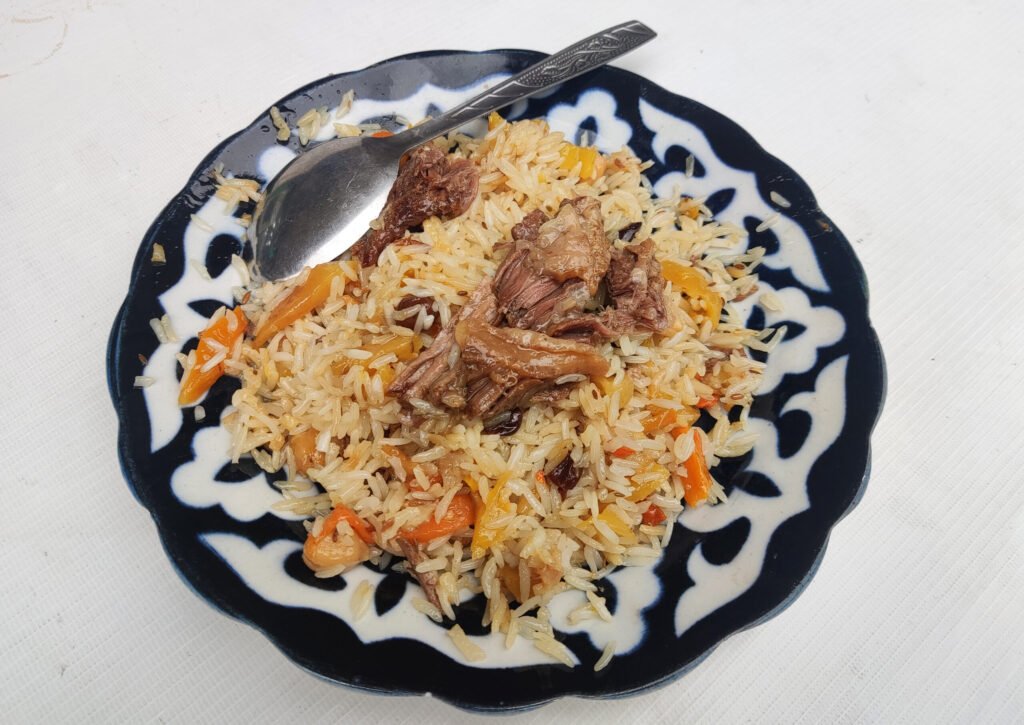
Uzbek food includes plov, a rice dish with meat and vegetables; non flatbread; filled samsa pastries; manti dumplings; lagman noodles; and shurpa soup. Try a few contrasting dishes rather than treating the menu as a checklist. Recipes vary, so ask about fillings, cooking fat, broth and toppings if you have ingredient restrictions.
How to use this article: Compare dish shapes and ingredients, choose between a market stop and a meal, or prepare specific ordering questions.
1. Six dishes worth getting to know
Recognize the shape, then check the filling
This is a selective introduction, not a complete inventory of Uzbek cooking. The ingredients describe typical versions rather than a fixed recipe or a dietary guarantee. Menus may use different spellings.
| Dish | What to expect | Typical ingredients or variations |
|---|---|---|
| Plov / palov | A rice dish served as a substantial meal | Rice, meat, vegetables and spices |
| Non | Flatbread, commonly baked against a tandoor oven’s walls | Flour-based dough; recipes vary |
| Samsa | A filled savory pastry | Meat is common; pumpkin, spinach, potato and chicken versions also exist |
| Manti | Large dumplings, commonly steamed | Thin dough around meat and fat; pumpkin versions also exist |
| Lagman | Noodles with a meat-and-vegetable accompaniment | Pulled, cut or fried noodle preparations; check the version |
| Shurpa | A meat-and-vegetable soup | Often mutton broth, large vegetable pieces, herbs and seasoning |
For a first sit-down meal, choose the form you actually feel like eating: rice, dumplings, noodles or soup. Save a pastry tasting for a different stop if you are not hungry enough for both. Sharing can make comparison easier, but check the portion size and how the dish is served before ordering for a group.
2. Regional differences without rigid culinary borders
UNESCO’s recognition of palov culture in Uzbekistan concerns making and sharing the dish, including hospitality and special occasions, not only a recipe. The practice was inscribed in 2016.
UNESCO separately recognizes Oshi Palav and its social and cultural context in Tajikistan. These neighboring traditions are a reason to avoid treating a shared dish as evidence of exclusive national ownership.
Uzbekistan’s government cuisine guide gives concrete regional examples: large, meat-filled Jizzakh samsa and triangular baked samsa associated with Bukhara. Those descriptions are useful things to ask about, not a rule that every pastry sold in either city must match.
Khorezm offers another recognizable variation: shivit oshi, whose green noodles are made with dill infusion and served with meat and vegetables. The national tourism guide also distinguishes stretched chuzma lagman, cut kesma noodles and fried kovurma lagman. “Lagman” alone therefore does not tell you whether to expect the same noodle preparation as yesterday.
3. A market browse is not the same as lunch
Decide whether you want to browse, snack or sit down
A market can introduce you to spices, fruit, dried fruit, nuts and sweets without being a single place to order lunch. National tourism material distinguishes the food stalls at a bazaar from nearby prepared-food businesses. Look for the experience you want rather than assuming every counter serves a meal.
For browsing, allow time to ask what is being sold and in what quantity. For a snack, ask what is inside a pastry and whether you are buying one piece or a portion. For a full meal, check seating, the dishes actually available and how long preparation will take before committing to a stop.
Keep lunch flexible on a day built around museums or a long transfer. A market visit can be the food-related part of the morning; it does not have to replace a seated meal. Use the Uzbekistan travel guide for the wider route, then leave room for food rather than scheduling every tasting between departures.
4. Bread, tea and the welcome at the table
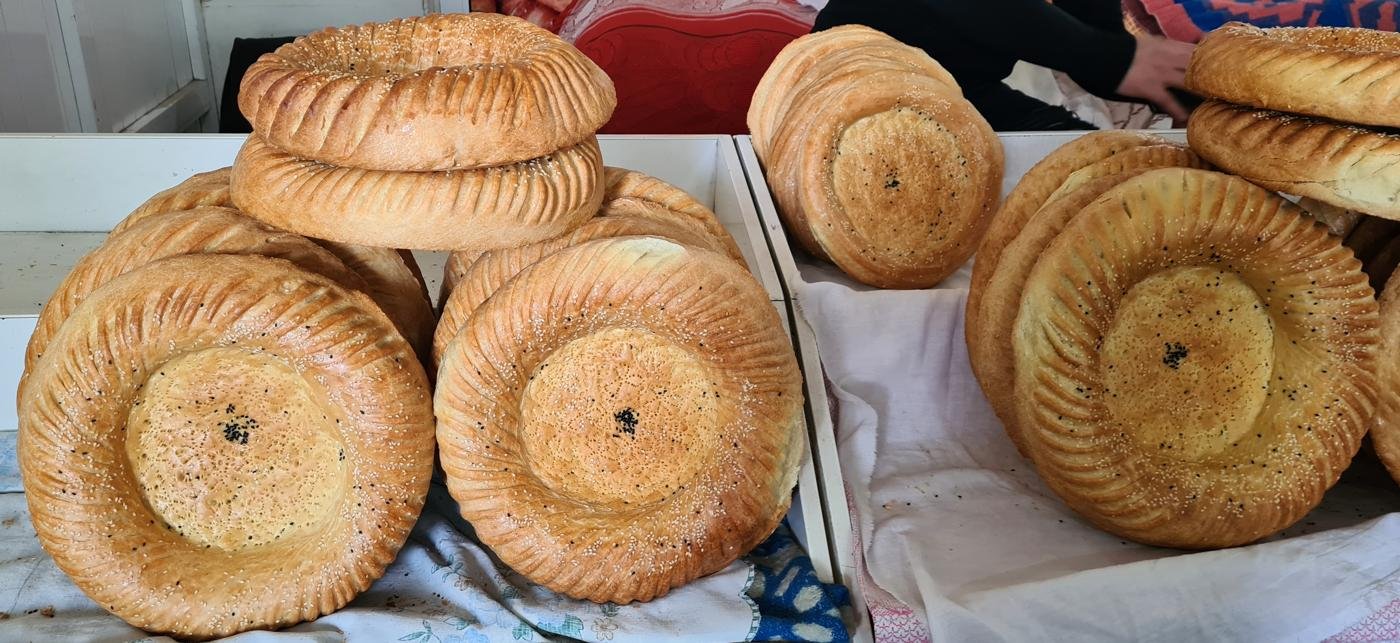
The national tourism service describes fresh bread and tea as part of welcoming a guest. You may see a host pour tea between a bowl and the pot before serving it. Treat this as a custom you may encounter, not a performance every visitor must reproduce.
Follow your host’s lead, ask before helping yourself to shared dishes, and make any ingredient restrictions clear before food is served. If you are unsure how to handle a shared plate or whether a refill is being offered, a simple question is better than trying to follow a memorized etiquette checklist.
In a restaurant, hospitality and the bill are separate matters. Ask whether bread, tea, salad or other accompaniments are included in your order. Check the menu or bill for any stated service charge rather than assuming a nationwide rule about extras or tipping.
5. Ask about the dish, not just its name
Questions that give the kitchen something specific to answer
A dish name cannot confirm vegetarian, vegan, halal or gluten-free suitability. Describe the ingredient or preparation that matters to you, then ask about the version being made. Removing visible meat is not the same request as preparing something without meat stock or animal fat.
- Filling: “What is inside this pastry or dumpling? Is any meat or animal fat added?”
- Dough or noodles: “Which flour is used, and does the dough contain egg or dairy?”
- Broth and cooking fat: “Is this cooked in meat stock? What fat or oil is used?”
- Toppings: “What comes on top or alongside it? Can you explain the sauce?”
- Preparation: “Is it prepared with the ingredient I need to avoid, or using shared equipment?”
- Portion: “Is this price per piece, per person or for a shared plate?”
For example, the national tourism description of manti includes meat and added fat, as well as pumpkin variations, and describes a fermented-dairy accompaniment called suzma. Asking only whether the filling is pumpkin would leave other parts of that meal unexplained.
For a serious allergy, explain the exact allergen and your cross-contact requirements; do not rely on a dish photograph or a vague “no problem.” A professionally translated, ingredient-specific note can help communication, but it is not a guarantee that a kitchen can meet the request. If the preparation cannot be established, choose an option whose ingredients and handling can be clarified.
There is no need to try all six dishes in one visit. Pick a few that suit your appetite and requirements, notice how they differ, and choose the next meal from what you enjoyed, not from what remains on a list.
What Did We Learn Today?
Recognizing a dish’s basic form makes an Uzbek menu easier to use; checking the actual preparation makes the choice more personal. Regional names, market visits and tea hospitality add context, but none replaces a clear question about what you are ordering. A few well-chosen meals are more useful than a long list of food names.
Sources & Data Notes
View culinary sources and scope
Sources checked November 18, 2026. Ingredients are typical descriptions, not standardized recipes or dietary certification. Regional examples illustrate variation rather than fixed culinary boundaries. UNESCO recognition concerns living cultural practices, not exclusive ownership. This is a visitor’s dish guide, not a tested restaurant review or cooking recipe.
- UNESCO: palov culture and tradition in Uzbekistan
- UNESCO: Oshi Palav in Tajikistan
- Government of Uzbekistan: Uzbek cuisine
- Uzbekistan Travel: lagman and Khorezm variation
- Uzbekistan Travel: manti
- Uzbekistan Travel: Uzbek flatbread
- Uzbekistan Travel: shurpa (Turkish)
- Uzbekistan Travel: tea ceremony
- Uzbekistan Travel: bazaar foods and prepared meals
Photo: Plov at Chorsu Bazaar, Tashkent, Bestalex, May 2, 2026; CC0 1.0.
Bread photo: Traditional Uzbek bread non, Tashkent, BeshevI, April 8, 2024; CC BY-SA 4.0. Resized for display; no crop or content changes.